
More homeowners are choosing slab backsplashes because they create a cleaner, more luxurious look with fewer grout lines and less daily maintenance. Instead of using dozens of small tile pieces, a slab backsplash covers the wall with one or several large sections of granite, quartz, marble, or quartzite.
The result is visually calmer and often makes the kitchen feel larger. A slab can also continue the countertop pattern up the wall, turning natural veining or engineered movement into a major design feature.
Tile is still practical and offers countless colors and layouts, but many homeowners now prefer the seamless appearance of stone. At Granite Empire of Nashville, we help customers compare the complete design, including slab availability, vein placement, appliance clearances, outlets, installation requirements, and budget. The best backsplash is not simply the most fashionable option. It should support the way the kitchen looks, functions, and is maintained every day.
Why Does a Slab Backsplash Look More Luxurious Than Tile?
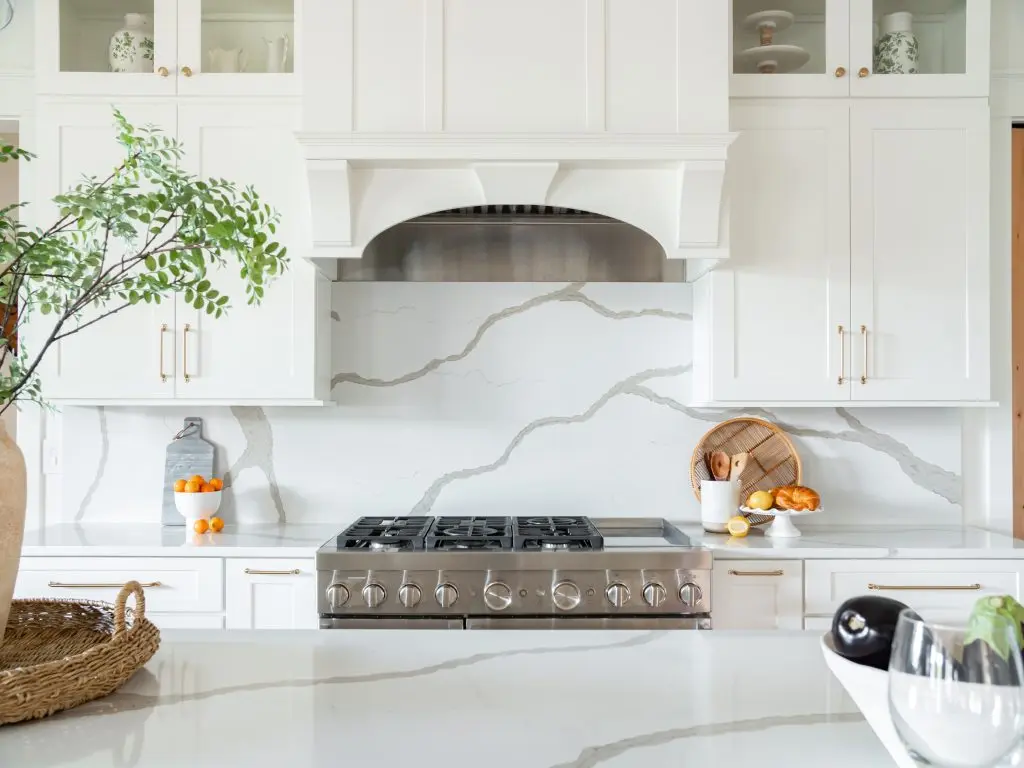
A slab backsplash looks more luxurious because it creates a large, uninterrupted surface with minimal visual breaks. Tile naturally introduces grout lines, repeated shapes, and pattern changes, while a slab allows the material itself to become the focal point.
This is especially effective with marble, quartzite, and granite. Their natural veins and mineral movement can resemble artwork when displayed vertically behind a range, sink, or coffee station. Quartz offers a more controlled version of the same effect, with patterns that coordinate easily across the countertop and backsplash.
Slab backsplashes also work well in simple kitchens. Flat-panel cabinets, concealed appliances, minimal hardware, and open shelving often benefit from one strong surface rather than a complicated tile design.
Homeowners working with countertop installers in Millersville, TN may choose the same material for both surfaces or use a contrasting slab. A light countertop with a darker backsplash can create depth, while matching materials provide a more continuous appearance.
The finish also influences the style. Polished stone reflects light and feels more formal. Honed surfaces create a softer, quieter look that works well in transitional and contemporary interiors.
Are Slab Backsplashes Easier to Clean Than Tile?
Yes, slab backsplashes are generally easier to clean because they have very few grout lines. Most everyday splashes can be removed with a soft cloth, warm water, and a cleaner suitable for the selected material.
Tile itself is usually easy to wipe, but grout requires more attention. Cooking oils, tomato sauce, coffee, and moisture can collect in grout joints, especially behind a range or near a sink. Lighter grout may gradually darken or become uneven without regular cleaning.
A slab reduces those vulnerable areas. There may still be seams, corners, or silicone joints, but the overall surface is much simpler. This is one reason slab backsplashes are popular in busy kitchens where homeowners want an upscale appearance without adding another high-maintenance feature.
Maintenance still depends on the material. Quartz is nonporous and does not require routine sealing. Granite, marble, and quartzite may need periodic sealing depending on the stone and how heavily the kitchen is used.
Marble also requires care around acidic foods and cleaning products because it can etch. A slab backsplash is easier to wipe than tile, but the material’s own characteristics still matter when selecting the right option.
Which Materials Work Best for a Slab Backsplash?
Quartz, granite, marble, and quartzite can all work well for slab backsplashes, but each material creates a different look and requires different care. The best choice depends on the kitchen style, cooking setup, budget, and level of maintenance the homeowner accepts.
| Material | Main advantage | Important consideration |
|---|---|---|
| Quartz | Consistent pattern and easy cleaning | Must be protected from excessive direct heat |
| Granite | Durable natural stone with strong heat resistance | May require periodic sealing |
| Marble | Elegant veining and timeless character | Can etch and stain without proper care |
| Quartzite | Natural movement with excellent durability | Usually costs more than entry-level options |
| Porcelain | Thin, lightweight, and available in large formats | Fabrication requires specialized experience |
Quartz is often chosen for contemporary kitchens because it creates a consistent appearance across multiple pieces. Granite is practical for homeowners who want natural stone and strong durability. Marble offers the most traditional luxury, while quartzite combines dramatic movement with greater resistance to everyday wear.
Granite Empire of Nashville offers granite starting at $48 per square foot, quartz starting at $58, and marble starting at $68. Final pricing depends on the selected slab, measurements, fabrication, cutouts, seams, wall conditions, and installation complexity.
Should the Backsplash Match the Countertops?
The backsplash does not have to match the countertops, but using the same slab creates the most seamless effect. Continuing one material from the horizontal surface onto the wall can make the kitchen feel more intentional and visually spacious.
Matching is particularly effective when the material has strong movement. The veins can be planned so they appear to continue upward, although perfect alignment is not always possible because of slab dimensions, cutouts, seams, and the shape of the wall.
A contrasting slab can also work beautifully. For example, a quiet white quartz countertop may be paired with a bold granite or quartzite backsplash. This keeps the work surface calm while giving the wall more character.
Homeowners considering countertop installers in Millersville, TN should view both materials together before making a final decision. Cabinet doors, flooring, paint, hardware, and lighting samples can help reveal whether the combination feels balanced.
The backsplash should not compete with every other feature in the room. When the countertop has dramatic veining, a matching continuation or simple backsplash usually works best. When the countertop is subtle, the backsplash can carry more visual movement without making the design feel crowded.
What Installation Details Make Slab Backsplashes More Complicated?
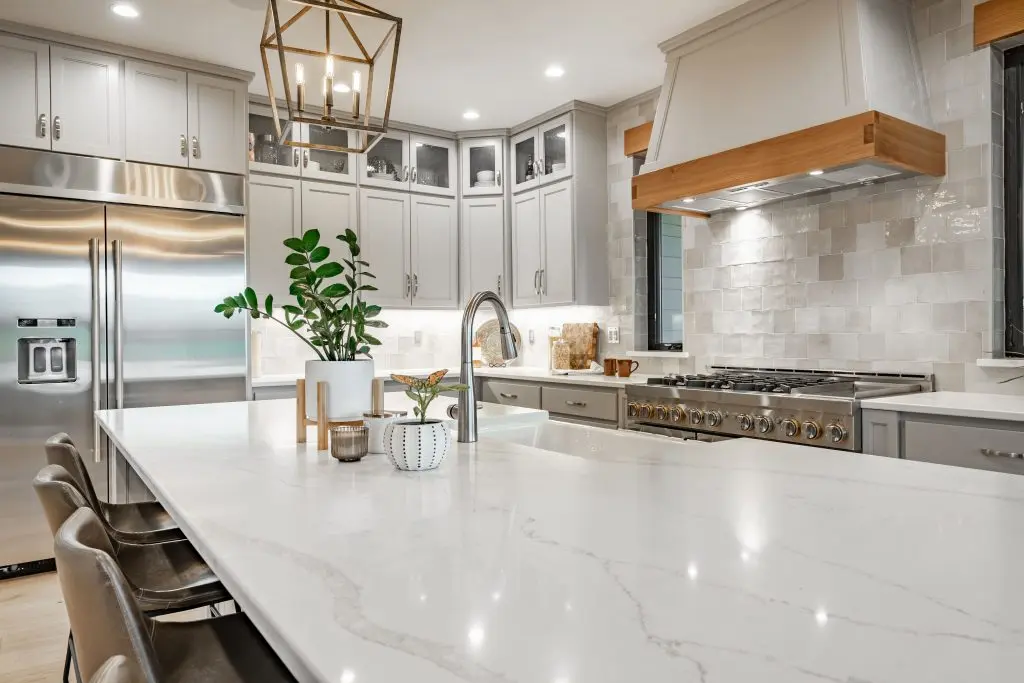
Slab backsplashes are more complicated to install because large pieces must be measured, fabricated, transported, and positioned accurately. Walls are rarely perfectly straight, so detailed templating is essential.
Outlets, switches, windows, shelves, range hoods, faucets, and upper cabinets all affect fabrication. Each opening must be measured precisely. A small error that would be easy to correct with individual tiles can be much more serious in a large stone panel.
The weight of the material also matters. Cabinets, drywall, and surrounding structures must be prepared correctly. Larger sections may require several installers and specialized equipment to move them safely.
Seam placement should be discussed before fabrication. A single piece is ideal, but slab dimensions and room access may require multiple sections. Good planning keeps seams away from the most noticeable areas and supports natural-looking vein transitions.
The appliance setup is equally important. High-output gas ranges and cooktops create substantial heat. Quartz contains resin and requires careful attention to manufacturer clearances. Natural stone is more heat-resistant, but ventilation, spacing, and installation standards still need to be followed.
Professional installation ensures the slab is supported correctly and fitted without unnecessary gaps or stress.
Is a Slab Backsplash Worth the Additional Cost?
A slab backsplash is often worth the additional cost for homeowners who value a seamless appearance, easy cleaning, and a strong visual feature. However, it usually costs more than a standard tile backsplash because it requires additional material, fabrication, templating, transportation, and installation labor.
The final price depends on how much wall area is covered. A smaller section behind the range may be relatively manageable, while installing stone between all countertops and upper cabinets requires substantially more material.
Slab selection also affects the budget. Some projects can use remaining material from the countertop slabs. Others require another full slab to achieve the desired vein placement or cover the walls.
Tile may be the better choice when budget flexibility is limited or when the homeowner wants a decorative pattern that cannot be created with stone. It is also easier to replace one damaged tile than an entire slab section.
A slab backsplash generally provides the most value when it supports the complete kitchen design rather than being added only because it is trending. Experienced countertop installers in Millersville, TN can review the measurements and determine whether existing countertop material can be used efficiently.
Frequently Asked Questions
Can a slab backsplash be installed only behind the range?
Yes. Installing a slab only behind the range creates a strong focal point while keeping the remaining backsplash more affordable. The surrounding walls can use tile, paint, or another compatible finish.
Does a slab backsplash need to be sealed?
Quartz does not require sealing. Granite, marble, and quartzite may need periodic sealing depending on the material’s porosity, finish, and exposure to moisture and cooking splashes.
Can outlets be installed in a stone backsplash?
Yes. Outlet and switch openings can be fabricated into the slab. Their exact positions must be confirmed before cutting because moving them later can be difficult and costly.
Is tile still a good backsplash option?
Yes. Tile remains practical, versatile, and often more affordable. It is a strong choice for homeowners who prefer decorative layouts, color variation, or easier individual repairs.
Does Granite Empire of Nashville serve Millersville, TN?
Yes. We regularly serve homeowners searching for countertop installers in Millersville, TN. Our showroom is located in Nashville, but our team provides material selection, templating, fabrication, delivery, and installation for projects in Millersville and surrounding communities.
Granite Empire of Nashville
4160 Gallatin Pike
Nashville, TN 37216
Phone: (615) 200-1591