
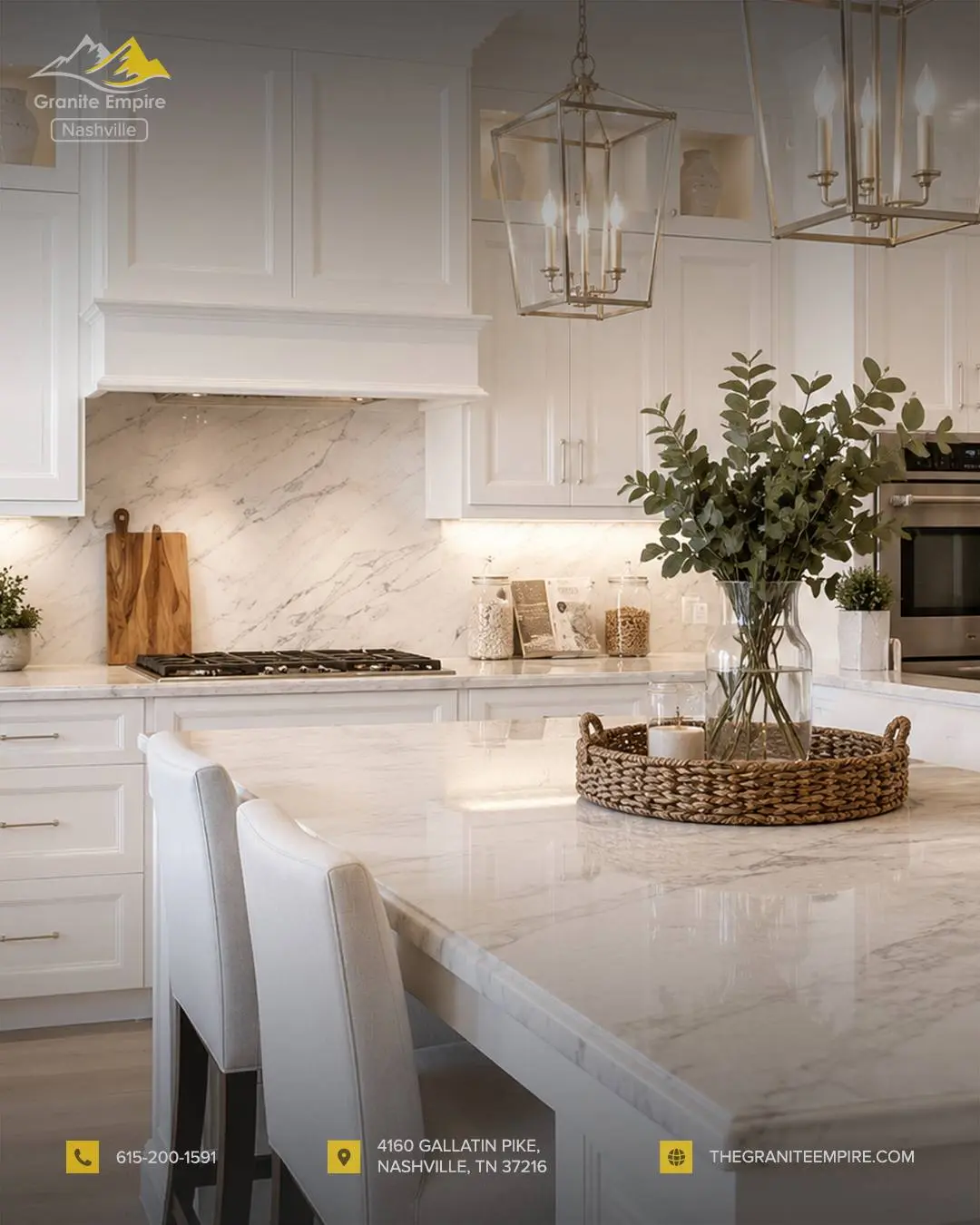
Marble usually creates the more naturally luxurious look, while quartz offers a cleaner and more controlled version of luxury. Marble stands out for its depth, organic veining, and one-of-a-kind character. Quartz appeals to homeowners who want a polished appearance with more predictable color and easier maintenance.
Both materials can look high-end when they are selected and installed well. The difference comes down to the atmosphere they create. Marble feels timeless, artistic, and naturally varied. Quartz feels refined, coordinated, and modern.
At Granite Empire of Nashville, we help homeowners compare complete slabs rather than choosing from small samples alone. Lighting, cabinetry, edge profiles, backsplash choices, and slab layout can make either marble or quartz the more luxurious option for a specific kitchen.
Why Does Marble Look So Luxurious?
Marble looks luxurious because every slab contains unique natural movement. Its veining, mineral variation, and subtle changes in color create depth that becomes especially noticeable across a large island or full-height backsplash.
Marble has also been associated with architecture, sculpture, historic buildings, and elegant interiors for centuries. That history still affects how people view it today. Even a simple marble slab can make a kitchen feel established and sophisticated.
Carrara marble usually has a softer gray pattern and a quieter appearance. Calacatta varieties often feature brighter backgrounds and bolder veining. Other marbles introduce warm beige, gold, brown, green, or charcoal tones.
The appeal of marble is not based on perfect consistency. One section of a slab may be calm, while another contains a dramatic vein that becomes the centerpiece of the room. That natural irregularity is exactly what many homeowners consider luxurious.
People comparing marble with quartz kitchen countertops in Nolensville, TN should view full slabs under similar lighting. A small sample cannot show how either material will look across an island, perimeter, or backsplash.
Can Quartz Look as Expensive as Real Marble?
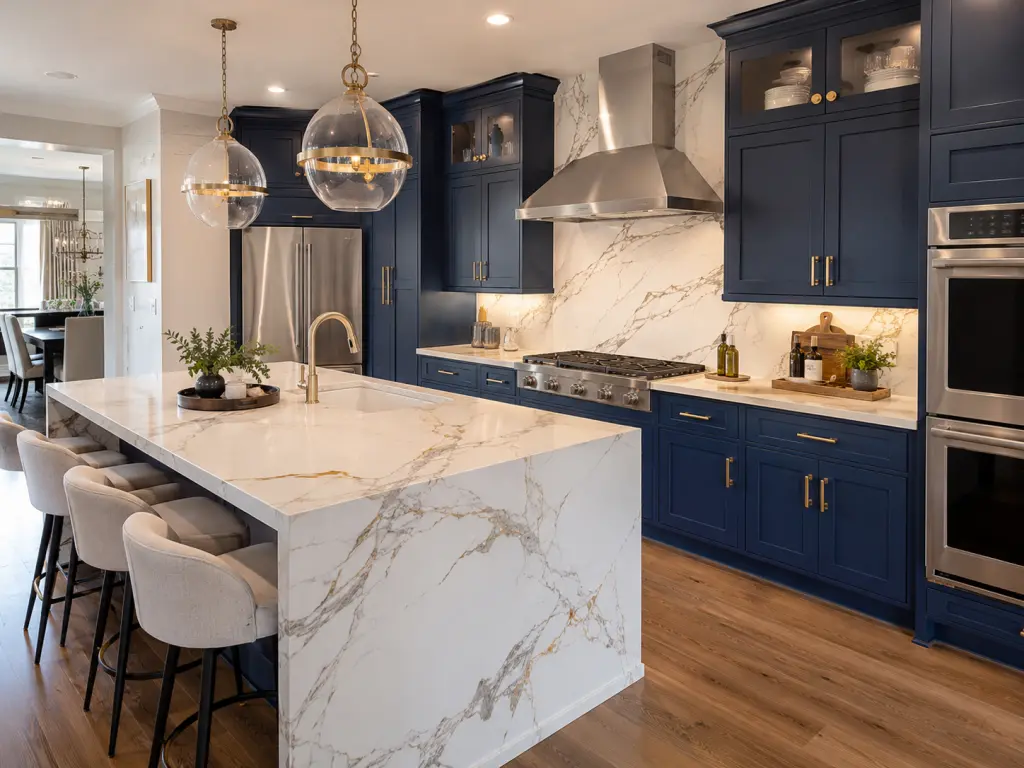
Yes, premium quartz can look extremely luxurious, especially when the pattern is coordinated carefully with the rest of the kitchen. Modern quartz designs can recreate the bright background and flowing veins associated with marble while providing more predictable movement.
Brands such as Cambria, Caesarstone, Silestone, and MSI offer designs ranging from quiet white surfaces to bold marble-inspired patterns. Some use thin gray veining, while others introduce warm gold, taupe, or dramatic charcoal movement.
Quartz often looks most expensive in kitchens with clean cabinetry, simple hardware, large islands, and carefully planned lighting. Its consistency can help the room feel calm and intentional rather than busy.
The strongest designs also avoid obvious pattern repetition. On a narrow countertop, repeated movement may not be noticeable. On a large island, full-height backsplash, or waterfall panel, the fabricator must consider how the veins travel across multiple pieces.
Marble creates luxury through natural variation. Quartz creates luxury through control. Homeowners who prefer clean lines and a precise color palette may actually find quartz more elegant than a heavily varied natural slab.
Which Material Is Better for a Statement Island?
Marble usually creates the more distinctive statement island, while quartz provides a cleaner and more predictable centerpiece. The better choice depends on whether the homeowner wants natural drama or controlled movement.
A large marble island displays more of the slab’s character than a narrow perimeter countertop. Sweeping veins, mineral deposits, and changes in tone become part of the room’s identity. Because every slab is different, the finished island feels custom.
Quartz can also make a strong statement, particularly with bold veining, mitered edges, or waterfall panels. The advantage is consistency. Homeowners can choose a pattern that works closely with the cabinets, flooring, and wall colors.
Slab layout matters with both materials. A sink or cooktop can interrupt an important vein, while a poorly positioned seam can make the pattern feel disconnected. Careful planning helps preserve the most attractive movement in visible areas.
For waterfall islands, the pattern should appear to continue naturally over the edge. Granite Empire of Nashville reviews layout details before fabrication whenever the selected slab has noticeable movement.
Is Marble More Expensive Than Quartz?
Marble can cost more than quartz, but the actual price depends on the color, brand, slab availability, kitchen measurements, and fabrication details. Premium quartz may cost more than an entry-level marble, while rare marble can exceed the price of many engineered surfaces.
At our Nashville showroom, quartz starts at $58 per square foot, while marble starts at $68 per square foot. Granite starts at $48 per square foot for homeowners who are also comparing other natural materials.
Final pricing depends on more than the slab. Edge profiles, sink and cooktop cutouts, seams, backsplash, waterfall panels, removal, transportation, and installation can all affect the total.
| Feature | Marble | Quartz |
|---|---|---|
| Appearance | Natural and one of a kind | Consistent and controlled |
| Veining | Naturally irregular | Designed and repeatable |
| Starting price | Usually higher | Often more predictable |
| Heat resistance | Strong | Requires protection from high heat |
| Stain resistance | Needs sealing and care | Generally nonporous |
| Etching | Can etch from acids | Does not etch like marble |
| Maintenance | More involved | Easier for everyday use |
| Best fit | Timeless, artistic kitchens | Refined, low-maintenance kitchens |
Homeowners should compare full project quotes instead of focusing only on the starting price. A simpler material with a thoughtful layout can look more expensive than a costly slab with poorly planned seams or awkward pattern placement.
Which Material Is Easier to Maintain?
Quartz is easier to maintain because it is generally nonporous and does not require routine sealing. Marble requires more attention to spills, acidic foods, cleaning products, and the natural changes that occur with use.
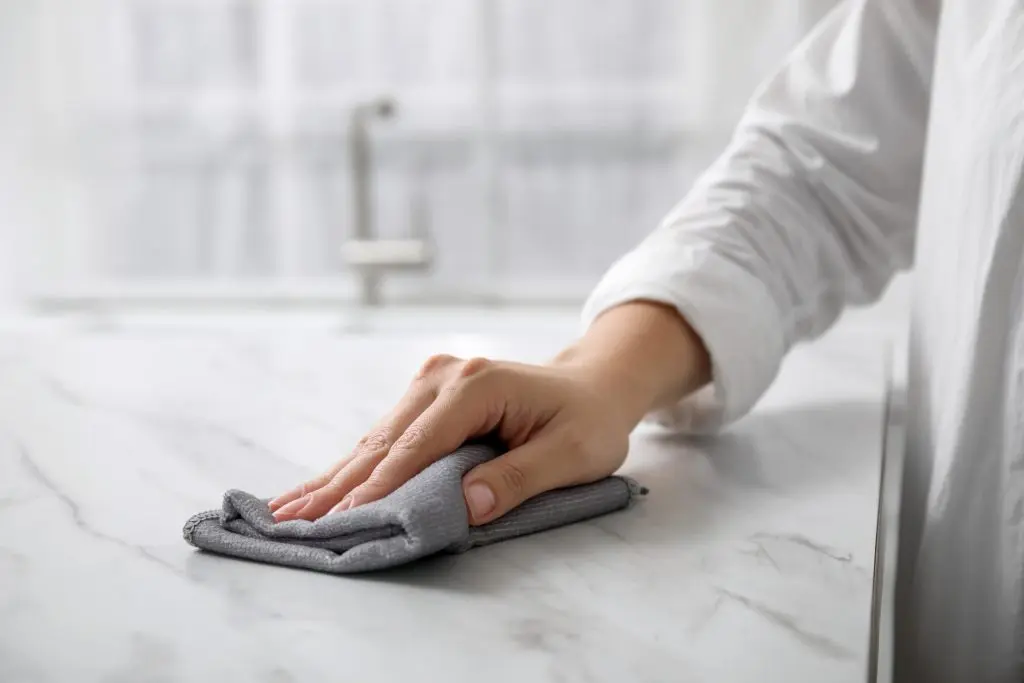
Quartz can usually be cleaned with mild soap, water, and a soft cloth. Abrasive pads and harsh chemicals should still be avoided. Hot cookware should be placed on a trivet because excessive heat can damage the resins in engineered quartz.
Marble is more sensitive to lemon juice, vinegar, wine, tomatoes, and some household cleaners. These substances can cause etching, which appears as a dull area on the finish. Sealer can help reduce staining, but it cannot prevent etching.
Some homeowners appreciate the patina that develops on marble over time. They see small changes as part of living with natural stone. Others want a surface that remains more visually consistent and therefore prefer quartz.
Families researching quartz kitchen countertops in Nolensville, TN often prioritize easier cleaning and less concern about common spills. Marble may still be the better fit for homeowners who value natural beauty more than low maintenance.
Which Material Works Better With Different Kitchen Styles?
Both materials work with traditional, transitional, contemporary, and minimalist kitchens. The final result depends more on the specific slab, finish, cabinetry, and surrounding materials than on the material name alone.
Polished marble paired with detailed cabinets and decorative hardware can create a formal, classic look. Honed marble beside flat-panel cabinetry can feel softer, quieter, and more modern.
Quartz is equally versatile. A subtle marble-look quartz works well in traditional kitchens, while a bold pattern can become the focal point of a contemporary room.
Cabinet color also changes the effect. White cabinets can make gray-veined marble feel bright and classic. Natural wood adds warmth to both cool quartz and white marble. Dark cabinets create contrast and often make pale countertops appear more dramatic.
How Long Does Installation Take?
Most marble and quartz projects are completed within two to three weeks from the first contact to installed countertops. Fabrication usually takes seven to ten business days after the template appointment, and installation is completed in one to two days for most standard kitchens.
Before templating, base cabinets should be installed, secured, and level. Sinks, faucets, cooktops, and other relevant appliances should also be selected so accurate cutout information is available.
More complex projects may need additional planning. Waterfall panels, full-height backsplashes, large islands, and detailed vein alignment require closer coordination before fabrication begins.
Material availability can also influence the schedule. A quartz design may be reordered, although color and pattern details can vary between production batches. Natural marble is unique, so finding an exact matching slab later may be difficult.
Homeowners considering quartz kitchen countertops in Nolensville, TN should choose their material before final templating whenever possible. Early selection gives us more time to inspect the slabs and plan the layout properly.
Frequently Asked Questions
Does quartz look fake next to real marble?
Not necessarily. High-quality quartz can create a convincing marble-inspired appearance, particularly when the veining is subtle and the slab layout is planned carefully. It will still look more consistent than natural marble.
Is marble too delicate for an everyday kitchen?
Marble can be used in an everyday kitchen, but homeowners should expect more maintenance. It may stain, scratch, or etch, and the surface can develop a patina over time.
Which material is better for families with children?
Quartz is usually more practical because it is nonporous, easier to clean, and less sensitive to common food spills. Marble can still work for families comfortable with additional care.
Which material adds more value to a home?
Both can support home value when they suit the kitchen and are professionally installed. Marble appeals to buyers who value natural luxury, while quartz attracts buyers who want beauty with easier maintenance.
Does Granite Empire of Nashville serve Nolensville, TN?
Yes. We operate from one physical location — 4160 Gallatin Pike, Nashville, TN 37216 — and regularly serve homeowners looking for quartz kitchen countertops in Nolensville, TN and throughout Williamson County. We do not have a separate office in Nolensville, but our team completes projects there consistently. Call us at (615) 200-1591 to schedule a showroom visit or request a quote.
Granite Empire of Nashville
4160 Gallatin Pike
Nashville, TN 37216
Phone: (615) 200-1591