

Marble has been used in architecture and interior design for thousands of years, from classical sculptures to grand European kitchens. Its soft veining, luminous surface, and timeless elegance make it one of the most recognizable natural stones in the world. Yet marble also carries a reputation that makes some homeowners nervous: the fear that it scratches or stains too easily.
Understanding why marble behaves differently from other stones helps eliminate much of that anxiety. Marble is a metamorphic rock composed primarily of calcium carbonate. While this composition creates its beautiful, smooth appearance, it also makes the surface slightly softer than granite or quartzite. That softness is what allows marble to develop its characteristic polish and subtle glow, but it also means the stone reacts differently to everyday kitchen conditions.
Granite Empire of Nashville often explains that marble’s reputation for staining or scratching is partly exaggerated. In reality, most issues arise not from the stone itself but from misunderstanding how marble should be used and maintained. Many homeowners assume marble requires complicated care routines, when in fact the solution is simply learning a few smart habits.
For homeowners considering marble kitchen countertops in Ashland City, TN, understanding the nature of marble is the first step toward protecting it. Marble is not fragile; it is simply honest. It responds to its environment in ways that natural materials always have.
When treated with reasonable care, marble countertops can remain beautiful for decades, developing character without losing their elegance.

How Can Everyday Kitchen Habits Protect Marble From Scratches?
Preventing scratches on marble countertops begins with understanding where scratches usually occur. Contrary to popular belief, most scratches do not come from knives cutting directly on the stone. In fact, the majority of surface marks appear from small particles of grit, sand, or debris being dragged across the surface.
These tiny particles can behave almost like sandpaper when pressure is applied. For example, sliding a heavy ceramic bowl across the countertop while a few crumbs or grains of salt sit underneath can create faint surface marks. The same thing can happen when cookware is moved across the stone without lifting it.
Granite Empire of Nashville often advises homeowners that the simplest habit to protect marble is lifting rather than sliding objects. Moving cookware gently instead of dragging it across the surface prevents the friction that leads to scratches.
Cutting boards also play an important role. While marble can tolerate occasional knife contact, cutting boards protect both the stone and the knife blade itself. Marble’s hardness can dull knives over time, so using a board benefits both surfaces.
For homeowners researching marble kitchen countertops in Ashland City, TN, these small habits quickly become second nature. Once adopted, they significantly reduce the risk of surface wear.
Interestingly, many chefs actually prefer marble surfaces for certain kitchen tasks such as pastry preparation. The naturally cool temperature of the stone makes it ideal for rolling dough. With proper care and mindful use, marble can function beautifully even in kitchens where cooking happens every day.
What Causes Marble Countertops to Stain — and How Can It Be Prevented?
Staining is another concern frequently associated with marble countertops. Because marble is a natural stone with microscopic pores, liquids can potentially seep into the surface if left unattended. However, modern sealing techniques significantly reduce this risk.
Granite Empire of Nashville explains that sealing marble creates a protective barrier that slows the absorption of liquids. This barrier gives homeowners time to clean spills before they penetrate the stone.
Common kitchen substances such as coffee, wine, tomato sauce, or citrus juices are often cited as staining risks. In reality, stains occur only when these substances remain on the surface for extended periods without being wiped away. A quick cleaning routine eliminates most problems before they begin.
For homeowners considering marble kitchen countertops, sealing is one of the most effective protective steps. Professional installation typically includes sealing the stone, and periodic resealing helps maintain the barrier over time.
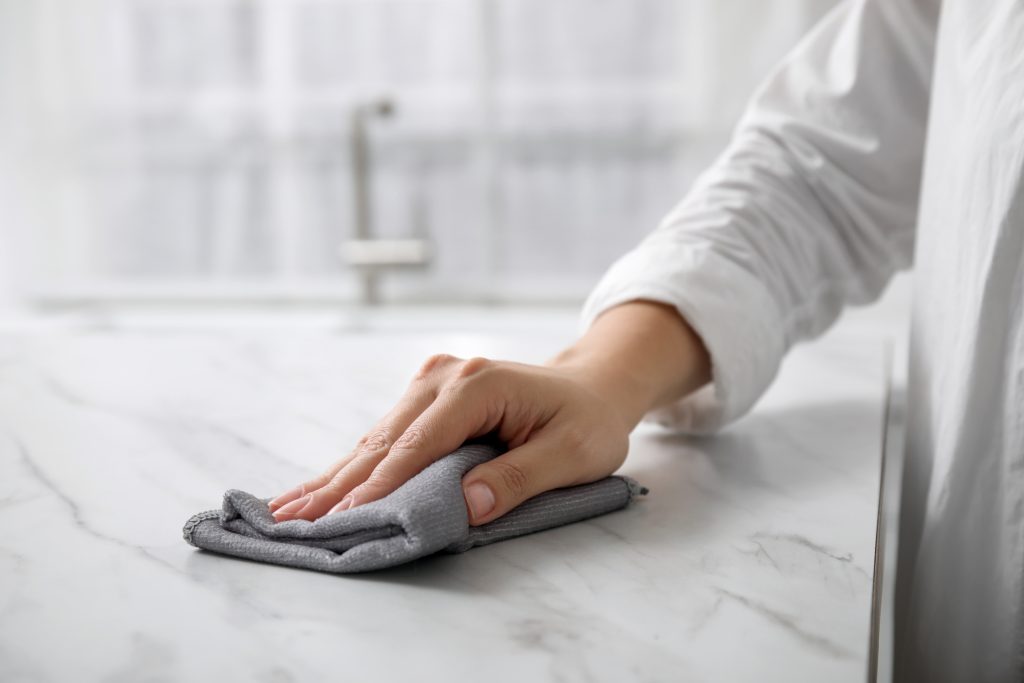
Equally important is the choice of cleaning products. Harsh chemical cleaners can weaken the sealant and expose the stone to staining. Mild soap, warm water, and soft cloths are usually sufficient for routine maintenance.
The key principle is simple: marble responds best to gentle care rather than aggressive cleaning methods. When treated respectfully, the stone maintains its natural beauty while resisting everyday kitchen spills.
Can Marble Countertops Still Be Practical for Busy Kitchens?
One of the most persistent myths about marble is that it belongs only in decorative or rarely used kitchens. In reality, marble has been used for centuries in active cooking spaces, particularly throughout Europe.
Professional chefs often appreciate marble for its naturally cool surface, which makes it ideal for baking and pastry work. The stone’s smooth texture also allows ingredients to move easily during preparation.
Granite Empire of Nashville frequently works with homeowners who initially worry that marble may be too delicate for their kitchen routines. Yet many discover that marble performs surprisingly well in active households once they understand its properties.
If you’re searching for marble kitchen countertops in Ashland City, TN, it is helpful to remember that marble’s strength lies not in resisting every possible mark but in aging gracefully. Over time, subtle changes in the surface may develop — tiny etches or faint wear patterns that tell the story of a kitchen well used.
Many homeowners come to appreciate this evolution. Rather than appearing damaged, the stone gains a soft patina that adds warmth and authenticity to the kitchen environment.
Marble does not demand perfection from the people who use it. Instead, it adapts to the rhythm of daily life.
How Does Proper Cleaning Keep Marble Looking New?
Cleaning routines for marble countertops are often far simpler than people expect. The key is consistency rather than complexity.
Granite Empire of Nashville encourages homeowners to think of marble care as part of normal kitchen habits rather than a special maintenance task. Wiping the surface after cooking, cleaning spills quickly, and using gentle cleaning solutions help preserve the stone’s appearance.
One of the most important aspects of cleaning marble is avoiding acidic cleaners. Because marble contains calcium carbonate, acidic substances can react with the surface and create small etch marks. These marks do not represent structural damage, but they can affect the stone’s polished finish.
For homeowners exploring marble kitchen countertops, selecting pH-neutral cleaning products is the safest option. These cleaners maintain the integrity of both the stone and its sealant.
Soft microfiber cloths are also recommended because they remove residue without scratching the surface. Abrasive scrubbers should generally be avoided.
With these simple precautions, marble countertops remain easy to maintain. Most homeowners find that their cleaning routine requires only a few minutes each day.

Why Do So Many Homeowners Still Choose Marble Despite the Myths?
Despite the concerns that sometimes surround marble, the material continues to be one of the most admired surfaces in kitchen design. Its beauty is difficult to replicate, and its timeless appeal has remained consistent across centuries of architecture.
Granite Empire of Nashville regularly works with homeowners who fall in love with marble the moment they see a full slab. The delicate veining, luminous surface, and sense of natural artistry create a visual effect that few materials can match.
For homeowners considering marble kitchen countertops in Ashland City, TN, the decision often comes down to character. Marble brings a sense of authenticity and elegance that transforms a kitchen into something more than just a cooking space.
Preventing scratches and stains ultimately comes down to understanding the stone. Lift heavy objects rather than dragging them, wipe spills promptly, use gentle cleaning products, and reseal the surface when needed.
These simple habits allow marble to remain beautiful while supporting the everyday activities of the kitchen.
Marble has survived thousands of years of use in homes, palaces, and public buildings around the world. In modern kitchens, it continues to offer the same qualities that made it famous in the first place: elegance, character, and timeless appeal.