
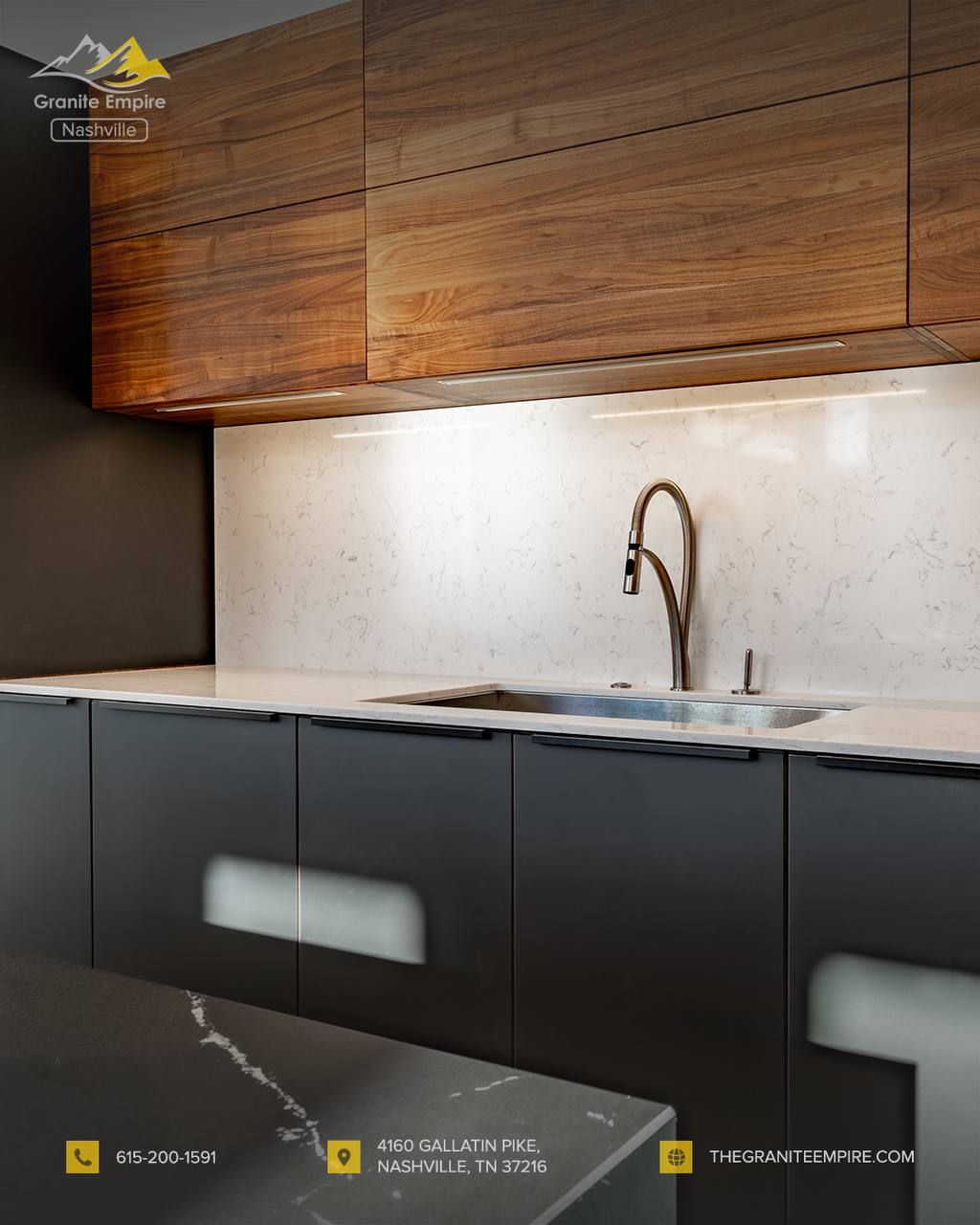
Small kitchens come with a unique set of challenges. Every design decision carries more weight because there is less room for error. Materials that might feel balanced in a large space can quickly become dominant in a compact one. This is why marble often raises questions for homeowners working with limited square footage.
Granite Empire of Nashville frequently hears concerns that marble might feel too bold or too visually heavy for a small kitchen. But in practice, marble often does the opposite. When chosen and applied correctly, it can make a small space feel more open, more refined, and more intentional.
For homeowners exploring marble countertops in Greenbrier, TN, the key is understanding how marble interacts with light and space. Its natural veining and subtle variations create movement across the surface, which can visually expand the room rather than confine it.
Unlike materials that appear flat or uniform, marble introduces depth. This depth prevents the kitchen from feeling static, even when the layout is compact. The surface becomes a focal point, but not in a way that overwhelms the space.
The success of marble in a small kitchen is not about size. It is about proportion, placement, and how the material is integrated into the overall design.
What Colors and Patterns of Marble Work Best in Smaller Spaces?
Color plays a critical role in how a small kitchen is perceived. Lighter tones are often recommended because they reflect light and create a sense of openness. Marble naturally aligns with this principle, but not all marble behaves the same way.
Granite Empire of Nashville often guides homeowners toward marble slabs that balance brightness with subtle variation. Pure white surfaces can feel clean, but they may lack the depth needed to create visual interest. On the other hand, heavily veined or high-contrast slabs can become too dominant in a limited space.
For those researching marble countertops in Greenbrier, TN, the most effective choices tend to be stones with soft veining and gentle transitions between tones. These patterns create movement without overwhelming the eye.
Warm undertones can also make a difference. A marble slab with hints of beige or soft gray can introduce warmth, making the kitchen feel more inviting. Cooler tones, while still effective, may create a sharper, more modern aesthetic.
The goal is not to eliminate contrast entirely, but to control it. A balanced marble design allows the countertop to enhance the space without competing with other elements.
In a small kitchen, every detail matters. The right marble color can make the difference between a space that feels confined and one that feels open.

How Can Marble Make a Small Kitchen Feel Larger?
One of the most overlooked benefits of marble is its ability to influence perception. In a small kitchen, where physical expansion is not an option, visual strategies become essential.
Granite Empire of Nashville often emphasizes that marble’s natural characteristics can create a sense of continuity. When the same material is used across multiple surfaces—such as countertops and backsplashes—it reduces visual breaks, making the space feel more cohesive.
For homeowners exploring marble countertops, this approach can significantly impact how the kitchen is experienced. Extending marble vertically, for example, draws the eye upward, creating the illusion of height.
Large-format slabs also contribute to this effect. Fewer seams mean fewer interruptions in the visual flow, allowing the stone’s pattern to guide the eye across the space.
Lighting enhances this further. Marble reflects light in a way that softens the edges of the room, reducing the sense of confinement. Natural light, in particular, interacts with the stone’s surface to create subtle variations throughout the day.
These elements work together to transform the perception of the kitchen. The space may remain physically small, but it feels more expansive.
Is Marble Practical for Everyday Use in a Small Kitchen?
Practicality is often a concern when choosing marble, especially in a kitchen that sees frequent use. Its softer composition compared to granite or quartzite raises questions about durability and maintenance.
Granite Empire of Nashville often addresses these concerns by focusing on how marble is actually used in real kitchens. While it is true that marble requires care, it is not as fragile as it is sometimes perceived to be.
For homeowners researching marble countertops in Greenbrier, TN, the key is understanding how to work with the material rather than against it. Marble can handle daily use when treated with reasonable care. Regular sealing, prompt cleaning of spills, and avoiding prolonged exposure to acidic substances help maintain its appearance.
In a small kitchen, where surfaces are used more intensively, this awareness becomes even more important. However, the limited space also means that maintenance is often more manageable. Cleaning a smaller surface requires less time and effort, making it easier to keep the countertop in good condition.
Marble also develops a natural patina over time. This is not a flaw, but a characteristic that reflects the way the material is used. For many homeowners, this evolving appearance adds to its appeal.
Practicality is not about eliminating maintenance. It is about choosing a material that fits into daily routines without becoming a burden.
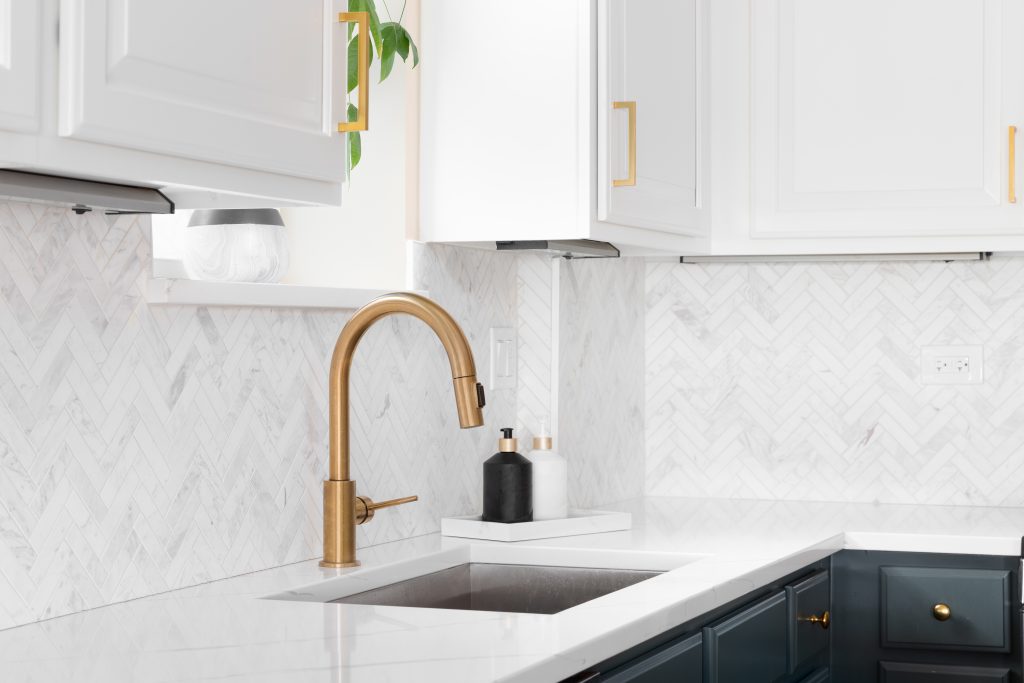
How Should Marble Be Combined with Other Design Elements in a Small Kitchen?
A small kitchen requires careful coordination between all design elements. The countertop does not exist in isolation. It interacts with cabinetry, flooring, lighting, and hardware, all of which influence the final result.
Granite Empire of Nashville often works with homeowners to ensure that marble is integrated thoughtfully into the space. In smaller kitchens, this integration becomes even more important because there is less room for contrast.
For those exploring marble countertops, one effective strategy is to maintain a consistent color palette. Light cabinetry paired with marble countertops can create a seamless look, while subtle contrasts can add depth without overwhelming the space.
Texture also plays a role. Smooth, polished marble can be balanced with matte finishes in other elements, creating a layered effect that feels intentional.
Hardware and fixtures should complement the tones within the marble. Warm metals can enhance beige or gold undertones, while cooler finishes align with gray or white surfaces.
The goal is not to create uniformity, but to achieve harmony. Each element should support the others, allowing the marble to remain a focal point without dominating the design.
In a small kitchen, balance is everything.
Why Marble Continues to Be a Strong Choice for Small Kitchens
Despite the challenges associated with smaller spaces, marble remains a popular choice for homeowners who want to create a kitchen that feels both functional and refined.
Granite Empire of Nashville consistently sees marble used successfully in compact kitchens because it offers qualities that go beyond size. It introduces light, depth, and character, transforming the space in ways that other materials may not.
For homeowners exploring marble countertops in Greenbrier, TN, this makes marble a compelling option. It allows the kitchen to feel more than just practical. It becomes a space that reflects attention to detail and thoughtful design.
Marble does not need a large area to make an impact. In fact, its presence can be even more pronounced in a smaller space, where every element is more visible.
The key is to approach the material with intention. Choosing the right slab, considering how it interacts with light, and integrating it with other design elements ensures that it enhances rather than overwhelms the kitchen.
In the end, marble is not defined by the size of the space. It is defined by how it is used.
And when used thoughtfully, it can turn even the smallest kitchen into a space that feels complete, balanced, and lasting.