
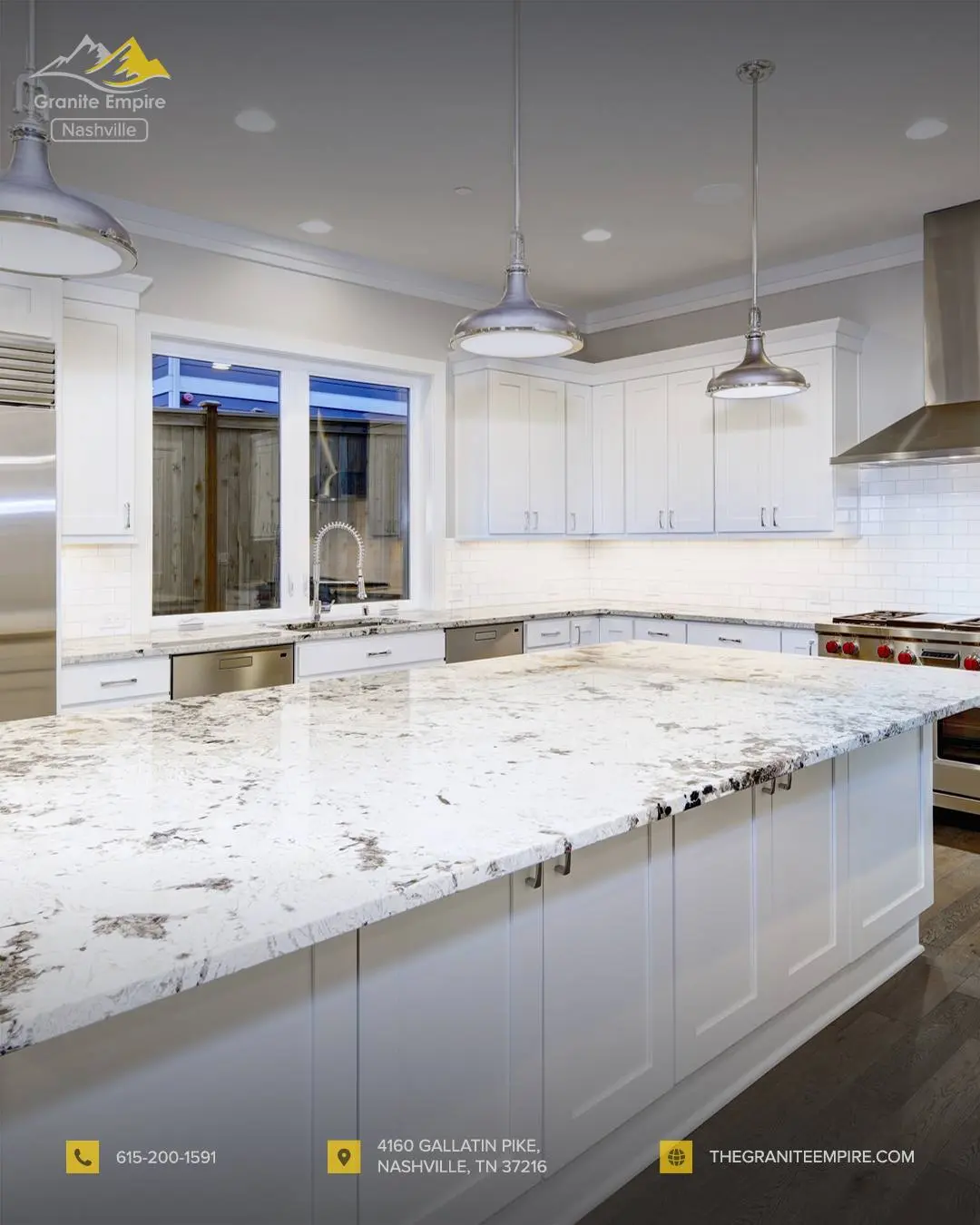
Matching granite veining across a large kitchen starts before fabrication. The slab pattern, countertop layout, island dimensions, seams, and direction of the natural movement all need to be considered together. Granite is natural stone, so veins and mineral patterns cannot always be matched perfectly, but careful slab selection and planning can create a much more continuous appearance.
At Granite Empire of Nashville, we look at the entire kitchen layout before fabrication so the natural pattern of the granite works with the space rather than being treated as separate pieces.
For homeowners considering custom granite countertops in Pleasant View, TN, this planning stage is particularly important when the kitchen includes a large island, long perimeter runs, or multiple countertop sections.
Can granite veining be matched across multiple slabs?
Yes, but there is an important distinction between matching and creating a visually coordinated flow.
Granite is a natural material, so two slabs from the same color or quarry can still have differences in:
- mineral movement;
- background color;
- vein direction;
- pattern density;
- individual markings.
Because of this, we do not promise that a seam will completely disappear.
Instead, the goal is to position the slabs so the transition looks as natural and intentional as possible.
When homeowners compare custom granite countertops in Pleasant View, TN, we recommend looking at the actual slabs together whenever possible. This gives us a better idea of how their patterns can work across the finished kitchen.
Why does slab layout matter so much?
A large kitchen can require more than one slab, especially when there is a substantial island combined with long perimeter countertops.
Where those slabs are placed affects how the pattern flows.
Before cutting, we consider:
- island dimensions;
- perimeter runs;
- sink location;
- cooktop location;
- corners;
- seams;
- overhangs;
- backsplash requirements.
The objective is to use the natural pattern strategically.
For example, if one section has particularly strong movement, we may position it where that pattern can become a feature rather than placing it in a small area that interrupts the overall design.
Should the granite veins run in the same direction?
Ideally, the pattern direction should feel intentional across connected surfaces.
However, not every granite has directional veining. Some slabs have more random mineral movement, while others have strong lines that visually resemble veins.
When the stone has directional movement, we look at whether the pieces should be oriented in the same direction or positioned differently to complement the kitchen layout.
This becomes particularly important on an island.
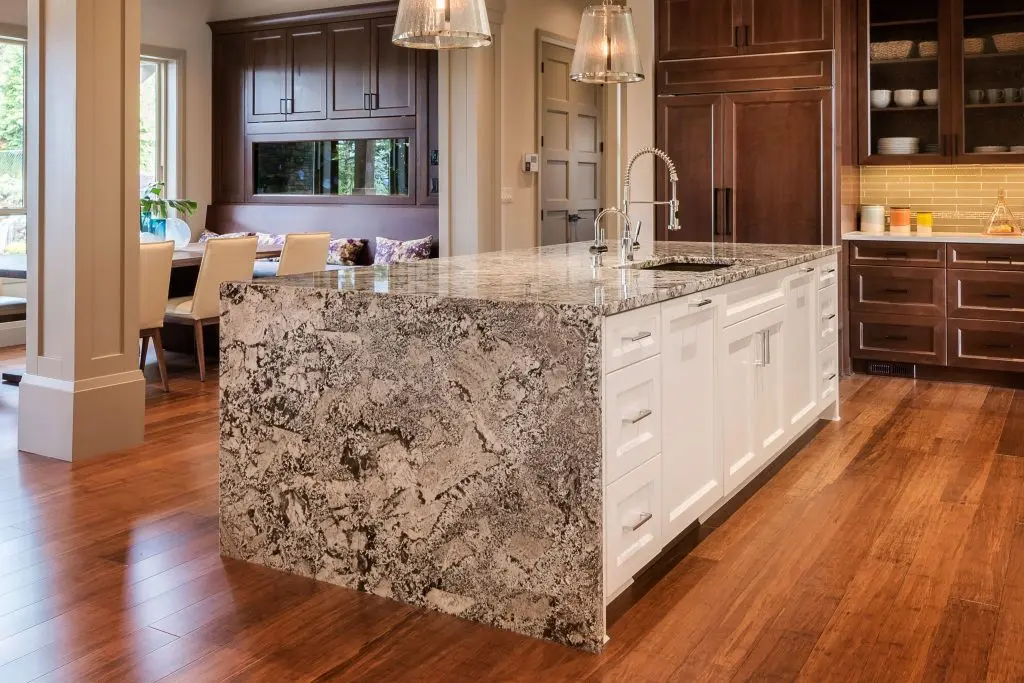
A large island provides enough surface area for the granite pattern to become one of the most noticeable design elements in the room.
How do you match granite across a kitchen island?
The island should be considered separately from the perimeter countertops, even when the same granite is being used.
We first look at the island’s dimensions and identify the most visually important areas.
If the slab has a strong pattern, we may position the most prominent movement so it is visible across the main working and seating areas.
The location of:
- sinks;
- cooktops;
- support cabinets;
- overhangs;
can affect how much of the pattern remains visible.
With a large island, it can be more important to plan the slab layout before fabrication than to focus only on the square footage required.
Can you bookmatch granite?
Bookmatching is a technique where two slabs are positioned as mirror images so their patterns create a symmetrical visual effect.
It can be dramatic with strongly veined natural stone.
However, bookmatching is not appropriate for every granite.
Some slabs have random movement rather than a pattern that can create a meaningful mirror image.
Bookmatching can also require additional material, careful slab selection, and more fabrication planning.
If the goal is a statement island or backsplash, it can be worth discussing during the slab-selection stage.
Does granite color affect how easy it is to match?
Yes.
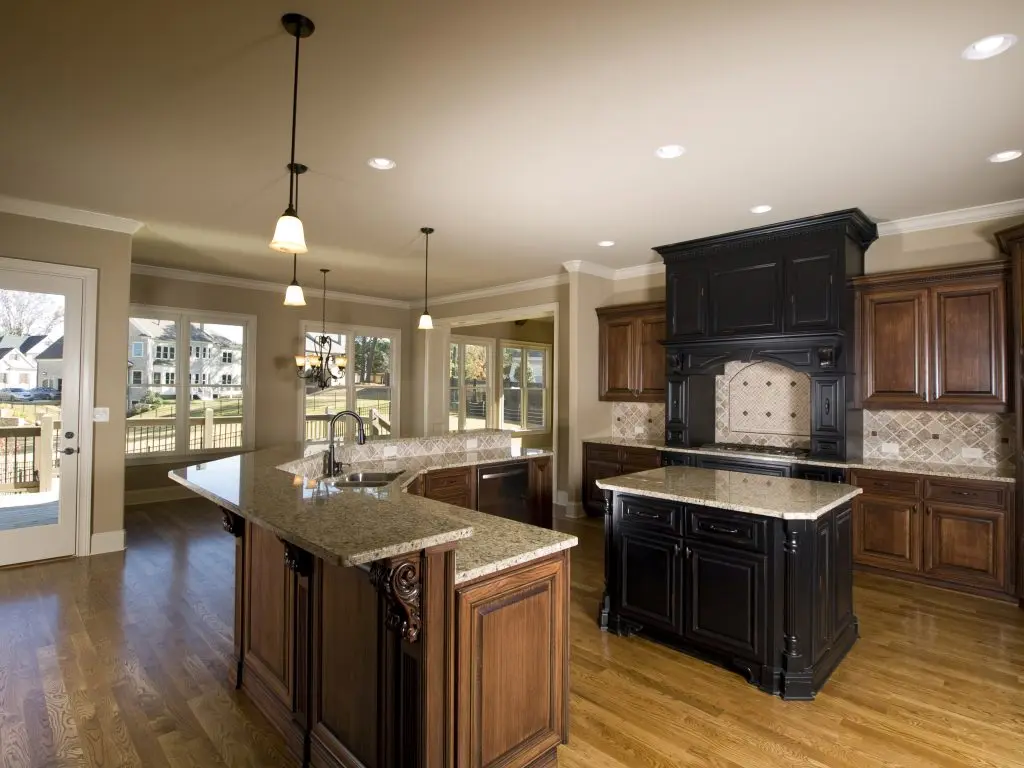
Granites with relatively consistent patterns can be easier to coordinate across multiple sections.
Highly varied granite can create more challenges because each slab may have significantly different movement.
This does not mean busy granite should be avoided. In fact, strong natural patterns can create a beautiful focal point when they are planned correctly.
The important thing is to understand what the material actually looks like before fabrication.
For custom granite countertops in Pleasant View, TN, this is one reason we recommend looking beyond a small color sample when possible.
What happens if two slabs don’t look exactly the same?
That is normal with natural stone.
Even slabs sold under the same granite name can have differences.
The objective is to choose slabs that work together rather than expecting manufactured uniformity.
We compare factors such as:
- background tone;
- pattern density;
- major veins;
- mineral colors;
- movement direction.
If two slabs are noticeably different, we can consider whether their placement within the kitchen makes the variation intentional.
Sometimes a difference that looks significant when the slabs are standing separately becomes much less noticeable once the countertops are installed and surrounded by cabinetry.
How many granite slabs will a large kitchen need?
It depends on the countertop dimensions and the size of the available slabs.
A large kitchen with an island may require multiple slabs even if the total square footage does not initially seem substantial.
The layout can also affect the amount of material required.
For example, a long countertop with a strong pattern may need to be planned differently from several shorter countertop sections.
The goal is not simply to calculate square footage. We also need to consider how the pieces will be cut from the slabs.
Can a large island be made from one granite slab?
Sometimes.
Whether one slab is sufficient depends on the slab dimensions and the size and shape of the island.
A large rectangular island may require more material than a smaller square or compact design.
If the island can be fabricated from one slab, that can eliminate a seam across the main surface.
However, the slab still needs to be large enough to accommodate the island while allowing for the required cuts and fabrication.
When the island is a major focal point, we evaluate this before finalizing the slab.
How much do custom granite countertops cost?
At Granite Empire of Nashville, granite starts at approximately $48 per square foot.
For basic material budgeting:
| Countertop area | Starting material cost |
|---|---|
| 40 sq. ft. | $1,920 |
| 50 sq. ft. | $2,400 |
| 60 sq. ft. | $2,880 |
| 70 sq. ft. | $3,360 |
These are starting material costs, not complete installed project prices.
The final project can also include:
- slab selection;
- templating;
- fabrication;
- edge profile;
- sink cutouts;
- cooktop cutouts;
- seams;
- backsplash;
- delivery;
- installation.
More complicated layouts or premium granite can change the final price.
Should the backsplash match the granite veins?
It can, but it does not always need to.
If the granite has dramatic movement, a matching stone backsplash can create a continuous look.
Another option is to use a simpler backsplash so the countertop remains the primary feature.
For example:
Dramatic granite + simple backsplash creates a strong focal point.
Subtle granite + patterned backsplash gives the backsplash more visual importance.
The right choice depends on how much pattern you want throughout the kitchen.
What should you look for when choosing granite for a large kitchen?
Start by looking at the entire slab rather than choosing based only on a small sample.
Pay attention to:
- Overall background color.
- Direction of major veins.
- Amount of natural movement.
- Areas you want to highlight.
- Potential seam locations.
- Island dimensions.
- Cabinet and backsplash colors.
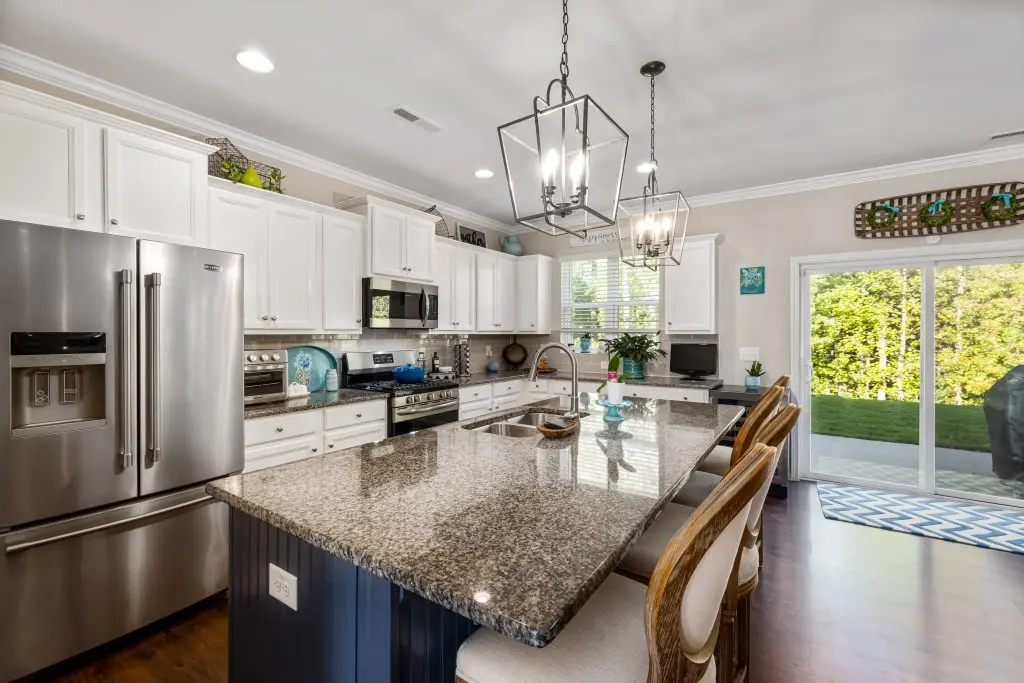
A large kitchen gives natural stone enough space for its pattern to become highly visible, so the slab should be evaluated as part of the entire design.
At Granite Empire of Nashville, we help homeowners consider these details before fabrication so the finished countertop feels coordinated rather than assembled from unrelated pieces.
Frequently Asked Questions
Can granite veins be perfectly matched?
Not always. Granite is natural stone, so variation between slabs is normal. Careful slab selection and layout can create a coordinated flow, but an exact match cannot always be guaranteed.
How do you make granite seams less noticeable?
Thoughtful seam placement, appropriate slab selection, and professional fabrication can make seams less visually prominent. The natural pattern and location of the seam both matter.
Can one granite slab cover a large kitchen island?
Sometimes. It depends on the slab dimensions and the island’s size and shape. A large island may require multiple slabs.
Is bookmatching possible with granite?
Yes, when the slab’s pattern is suitable. Bookmatching creates a mirrored effect and can work particularly well for dramatic natural patterns.
How much does granite cost at Granite Empire of Nashville?
Granite starts at approximately $48 per square foot. A 50-square-foot project would start at approximately $2,400 in material, before fabrication and installation.
How long does granite fabrication take?
After final templating, fabrication generally takes 7-10 business days, with most projects taking approximately 2-3 weeks overall.
Does Granite Empire of Nashville serve Pleasant View, TN?
Yes. Granite Empire of Nashville provides custom granite countertops in Pleasant View, TN, including slab selection, professional templating, custom fabrication, cutouts, edge finishing, delivery, and installation.
The best granite layout is planned before the first cut. When slab selection, vein direction, island placement, and seams are considered together, the natural movement of the stone can become one of the strongest features of a large kitchen.