

Quartz countertops have become one of the most popular choices for modern kitchens thanks to their clean appearance, durability, and low-maintenance reputation. However, “low-maintenance” does not mean “no maintenance at all.” Many homeowners unintentionally shorten the lifespan or dull the appearance of their quartz surfaces by using the wrong cleaning habits, harsh chemicals, or improper tools. Understanding how quartz is made and how it reacts to everyday kitchen use is essential if you want your countertops to stay flawless for years.
Quartz is an engineered stone composed of natural quartz minerals combined with resins and pigments. This composition makes it non-porous and resistant to staining, but it also means that certain substances, temperatures, and cleaning products can cause damage over time. Below, we’ll answer the most common and important questions homeowners ask about proper quartz care, focusing on real-life use, practical habits, and long-term protection.
Granite Empire of Nashville works with homeowners every day who want beautiful, long-lasting surfaces, and proper care is just as important as proper installation.
What Is the Safest Way to Clean Quartz Countertops on a Daily Basis?
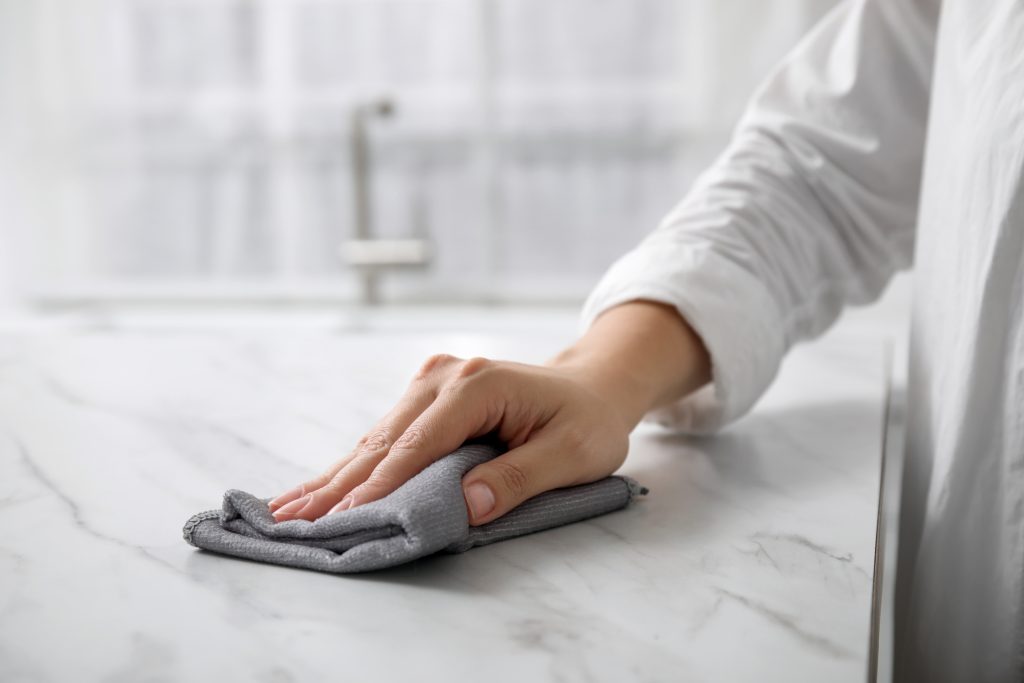
Daily cleaning is where most long-term countertop damage either begins or is prevented. The safest and most effective way to clean quartz countertops is also the simplest. Warm water, a mild dish soap, and a soft microfiber cloth are all you need for routine upkeep. This combination removes food residue, grease, and everyday spills without harming the resin binders that hold quartz together.
Because quartz is non-porous, liquids do not soak into the surface the way they might with natural stone. However, residue can still build up if spills are left to dry repeatedly. Wiping down the surface after cooking, preparing drinks, or handling acidic foods helps preserve the original finish and prevents dull spots from forming.
Avoid abrasive sponges, scouring pads, or powdered cleaners, even if the countertop appears heavily soiled. These tools can wear down the surface finish over time, leaving the quartz looking cloudy or uneven. A gentle approach used consistently is far more effective than aggressive scrubbing done occasionally.
Homeowners who invest in quartz countertops in White House, TN often choose them for busy kitchens, and daily habits matter more than any occasional deep cleaning. Consistency, not intensity, is the key to keeping quartz looking new.
Which Cleaning Products Should Never Be Used on Quartz Surfaces?
One of the most common mistakes homeowners make is assuming that “stronger” cleaners equal better results. In reality, harsh chemicals are one of the fastest ways to damage quartz countertops. Products containing bleach, ammonia, oven cleaner, drain cleaner, or highly alkaline or acidic ingredients can break down the resin that binds the quartz particles together.
Disinfecting wipes and sprays are another area of concern. While some are labeled as “safe for countertops,” many still contain chemicals that can cause discoloration or dullness when used repeatedly. If you want to disinfect your quartz surface, choose a cleaner specifically labeled as safe for engineered stone, and use it sparingly rather than as part of your daily routine.
Solvents such as acetone, paint thinner, or nail polish remover should never be used directly on quartz. Even brief contact can leave permanent marks or weaken the surface. If a sticky substance needs to be removed, warm water and a plastic scraper are far safer alternatives.
Homeowners searching for quartz countertops in White House, TN often prioritize durability, but even durable surfaces have limits. Understanding what not to use is just as important as knowing what works.
How Do You Safely Remove Tough Spills Like Coffee, Wine, or Grease?
Quartz is highly resistant to staining, but that does not mean spills should be ignored. Substances like coffee, red wine, oils, and sauces can leave residue on the surface if allowed to dry repeatedly. While these spills typically won’t penetrate quartz, they can create visible film or discoloration over time.
For tougher spills, start by wiping the area with warm water and mild soap. If residue remains, use a non-abrasive cleaner designed for quartz or a simple solution of water and a small amount of isopropyl alcohol. Apply the solution to a soft cloth rather than directly onto the countertop, and wipe gently.
For hardened spills, a plastic putty knife can be used carefully to lift the residue without scratching the surface. Never use metal blades or sharp tools, as these can permanently damage the finish.
Quick response is always best. The sooner a spill is cleaned, the easier it is to remove. This habit is especially important in households with frequent cooking or entertaining. Many homeowners who choose quartz countertops appreciate how forgiving quartz can be, but good habits ensure that forgiveness lasts long-term.

Can Heat Damage Quartz Countertops Even Though They’re Durable?
Heat is one of the most misunderstood aspects of quartz care. While quartz is heat-resistant, it is not heat-proof. The natural quartz particles can tolerate high temperatures, but the resin binders cannot. Placing hot pots, pans, or baking trays directly onto the surface can cause discoloration, cracking, or permanent scorch marks.
The safest practice is always to use trivets, hot pads, or cooling racks under hot cookware. This applies not only to stovetop items but also to slow cookers, air fryers, and electric griddles, which can generate sustained heat in a single spot.
Heat damage may not appear immediately. In some cases, repeated exposure causes gradual weakening of the resin, leading to dull areas or subtle surface changes that worsen over time. This kind of damage is not reversible and cannot be polished out like surface residue.
Professionals who install quartz countertops in White House, TN often emphasize heat protection because it’s one of the few vulnerabilities quartz has. Simple preventive habits can preserve both appearance and structural integrity.
How Do Scratches Happen on Quartz and How Can They Be Prevented?
Quartz is highly scratch-resistant, but not scratch-proof. Cutting directly on the surface with knives or dragging heavy cookware across the countertop can still cause surface marks. While these scratches may be subtle, they can accumulate and affect the overall appearance over time.
Using cutting boards for food preparation is essential, not only to protect the countertop but also to preserve your knives. Sliding appliances or heavy objects should be lifted rather than dragged. Even small abrasive particles, such as sand or grit, can create micro-scratches if rubbed repeatedly across the surface.
Unlike natural stone, quartz cannot be refinished or resurfaced once deeply scratched. This makes prevention especially important. Maintaining a habit of using protective accessories ensures that the surface remains smooth and consistent.
Homeowners who value long-term performance from quartz countertops in White House, TN benefit most from treating the surface as durable but deserving of care, rather than indestructible.

Does Quartz Need Sealing or Special Long-Term Treatments?
One of the biggest advantages of quartz is that it does not require sealing. Because it is non-porous, there is no need for periodic sealant applications, unlike granite or marble. This makes quartz an appealing option for homeowners who want a simpler maintenance routine.
That said, long-term care still matters. Avoiding harsh chemicals, protecting the surface from heat, and cleaning regularly with gentle products all contribute to longevity. Over time, residue buildup from improper cleaners can create a hazy film, even if the quartz itself remains structurally sound.
If your quartz countertop begins to lose its shine, the cause is almost always product buildup rather than wear. Switching back to mild soap and water usually restores clarity within a few weeks of consistent care.
Granite Empire of Nashville often reminds homeowners that quartz performs best when its original finish is preserved through smart daily habits rather than corrective treatments later.
Final Thoughts on Keeping Quartz Countertops Looking New
Quartz countertops offer an excellent balance of beauty, strength, and convenience, but their longevity depends on how they’re treated. Proper cleaning techniques, product awareness, and simple preventive habits can keep quartz surfaces looking pristine for decades.
Homeowners who invest in professionally installed quartz benefit most when they understand both the strengths and limitations of the material. With the right care, quartz maintains its color, finish, and performance even in busy kitchens.
Granite Empire of Nashville continues to help homeowners make informed decisions not only during selection and installation, but throughout the life of their countertops.