

The debate between honed and polished stone has been circulating in kitchen design conversations for years, often framed as a simple trade-off between beauty and practicality. Many homeowners walk into a showroom already convinced that honed stone is high-maintenance, delicate, and risky for everyday use, while polished stone is perceived as the safer, more durable option.
But reality inside actual kitchens tells a more nuanced story.
Honed stone, with its matte, soft-touch finish, does behave differently from polished surfaces. It lacks the glossy seal that reflects light and tends to reveal more of the stone’s natural texture. This openness is exactly what gives honed surfaces their understated, sophisticated look. At the same time, it’s also why some homeowners assume they are harder to maintain.
Granite Empire of Nashville often explains that the perception of difficulty comes less from actual performance and more from expectations. Honed surfaces do not necessarily stain more easily, but they do show marks differently. Water spots, fingerprints, and even subtle oil traces can be more visible simply because the surface does not reflect light in the same way polished stone does.
For homeowners exploring custom granite countertops in Ashland City, TN, understanding this distinction is essential. Maintenance is not necessarily harder with honed stone — it is simply more visible. That visibility creates the impression of higher maintenance, even when the effort required is similar.
In real kitchens, the difference often comes down to lifestyle. Those who prefer a pristine, always-perfect surface may feel more comfortable with polished stone. Those who appreciate a softer, more natural aesthetic often find honed finishes worth the trade.

Does Honed Stone Stain More Easily Than Polished Stone?
One of the most persistent myths surrounding honed stone is that it stains more easily than polished surfaces. This belief is rooted in the idea that a matte finish leaves the stone more “open” or porous.
In reality, both honed and polished natural stones require sealing to protect against stains. The sealing process fills microscopic pores within the stone, creating a barrier against liquids and oils. Once properly sealed, both finishes perform similarly in terms of stain resistance.
Granite Empire of Nashville frequently reassures homeowners that the difference lies not in how easily stains occur, but in how they appear. On a polished surface, light reflection can disguise minor residue or marks. On a honed surface, the absence of shine makes these same marks more noticeable.
For homeowners considering custom granite countertops in Ashland City, TN, this is a crucial distinction. A honed countertop may show a faint darkening when water sits on it temporarily, but this is not permanent staining. Once the surface dries, the appearance typically returns to normal.
True staining — from substances like oil, wine, or acidic liquids — depends more on sealing quality and maintenance habits than on the finish itself. Regular sealing ensures that both honed and polished stone remain protected.
In real kitchens, the idea that honed stone stains more easily is less about actual performance and more about visual perception. The surface tells you what is happening more clearly, which can be seen as either a disadvantage or a helpful indicator.
How Does Daily Cleaning Differ Between Honed and Polished Surfaces?
Daily maintenance routines for natural stone are surprisingly similar regardless of finish. Both honed and polished countertops benefit from gentle cleaning with mild soap and water, followed by drying with a soft cloth.
However, the experience of cleaning these surfaces can feel different.
Polished stone tends to hide minor smudges and streaks, allowing homeowners to clean less frequently without noticing imperfections. Honed stone, on the other hand, reveals these small details more readily. As a result, homeowners may find themselves wiping down honed surfaces more often simply to maintain a consistent appearance.
Granite Empire of Nashville often notes that this difference influences perception. A homeowner might feel that honed stone requires more effort, when in reality they are simply more aware of the surface’s condition.
If you’re searching for custom granite countertops, understanding your own habits becomes important. Those who enjoy keeping surfaces spotless may not find honed stone demanding at all. In fact, many appreciate how it clearly shows when cleaning is needed.
Another factor is texture. Honed finishes have a softer, slightly more tactile feel compared to the smooth, reflective surface of polished stone. This can make wiping down spills feel more direct and effective, as the cloth maintains better contact with the surface.
In everyday kitchens, the maintenance difference is subtle. Both finishes are manageable, but they create different relationships between the homeowner and the surface.
Are Scratches and Etching More Visible on Honed Stone?
Durability is often a key concern when choosing between finishes, particularly in busy kitchens where countertops see constant use.
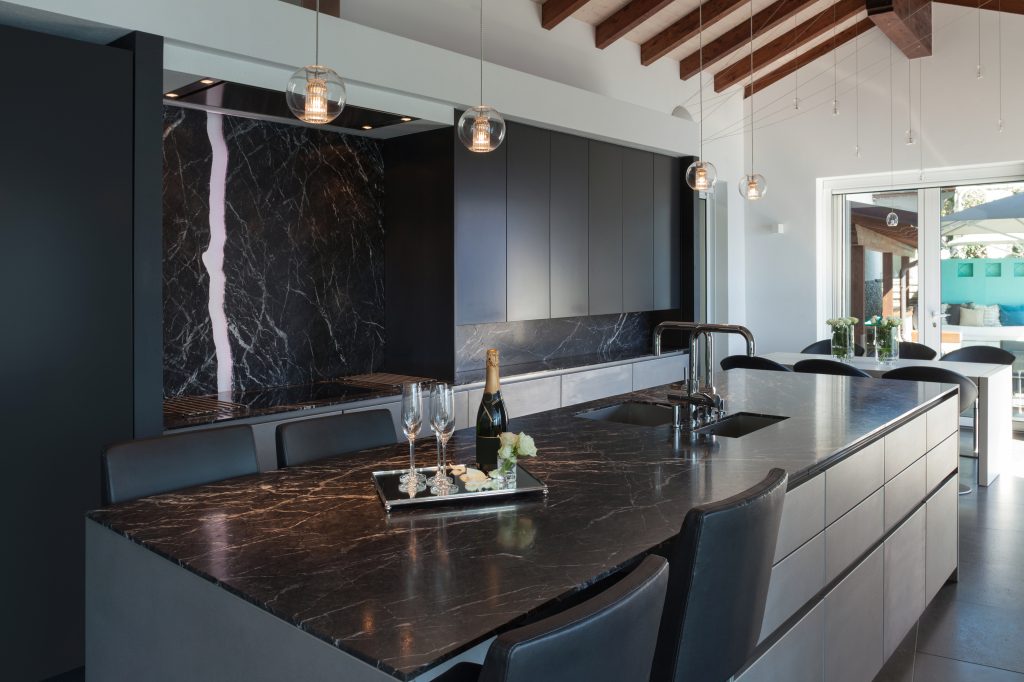
Honed stone tends to conceal scratches better than polished stone. Because the surface lacks a glossy reflection, small abrasions blend into the matte texture rather than standing out under light. This makes honed finishes particularly appealing for households with heavy daily use.
Granite Empire of Nashville frequently highlights this advantage to homeowners who worry about wear over time. In many cases, honed countertops age more gracefully, developing a soft patina rather than showing sharp, noticeable imperfections.
For those considering custom granite countertops in Ashland City, TN, this characteristic can be especially valuable in family kitchens or spaces used for frequent cooking.
Etching, however, behaves differently. On materials like marble, honed finishes may show etching slightly more because the matte surface does not disguise changes in texture. Polished surfaces, while more reflective, can sometimes make etching less obvious depending on lighting.
In real kitchens, this balance often comes down to priorities. Honed stone offers a forgiving surface for scratches, while polished stone may better mask certain types of etching. Neither option is universally superior — they simply respond differently to wear.
Which Finish Works Better for Busy, Real-Life Kitchens?
The question of which finish is “better” often assumes that one option must outperform the other in every scenario. In reality, the choice between honed and polished stone depends on how the kitchen is used and how the homeowner defines beauty.
Honed finishes bring a sense of warmth and subtlety to a kitchen. They absorb light rather than reflecting it, creating a softer visual effect that feels calm and inviting. This makes them particularly appealing in modern and transitional designs where understated elegance is key.
Polished finishes, by contrast, amplify light and color. They highlight the natural patterns within the stone, making veins and mineral structures appear more dramatic. In kitchens designed to feel bright and vibrant, polished stone often enhances the overall aesthetic.
Granite Empire of Nashville often works with homeowners to match the finish to the lifestyle. For those who cook frequently and appreciate surfaces that age gracefully, honed stone offers durability and a forgiving appearance. For those who prioritize a pristine, reflective look, polished stone remains a strong choice.
If you’re exploring custom granite countertops, the decision should consider not only maintenance but also how the kitchen feels on a daily basis. The finish influences the atmosphere as much as the functionality.
In busy kitchens, both finishes perform well when properly sealed and maintained. The difference lies in how they respond visually to daily use.

Why the “Maintenance” Debate Often Misses the Bigger Picture
The conversation around honed versus polished stone often becomes overly focused on maintenance, as if one finish requires significantly more effort than the other. In reality, both surfaces are durable, practical, and suitable for everyday kitchens.
What truly matters is how each finish interacts with light, texture, and wear over time.
Granite Empire of Nashville often encourages homeowners to move beyond the idea of “easy” versus “difficult” and instead think about how they want their kitchen to look and feel. Honed stone offers a softer, more organic appearance that evolves naturally with use. Polished stone delivers a brighter, more defined aesthetic that emphasizes clarity and shine.
For homeowners searching for custom granite countertops in Ashland City, TN, the right choice is the one that aligns with both lifestyle and design vision. Maintenance is not a barrier with either option — it is simply a matter of understanding how each surface behaves.
In real kitchens, the difference between honed and polished stone is less about effort and more about perception. Both finishes are capable of lasting for years while maintaining their beauty. The key is choosing the one that feels right, not just on the day of installation, but in the everyday moments that follow.
Natural stone, in any finish, remains one of the most enduring and expressive materials in kitchen design.