
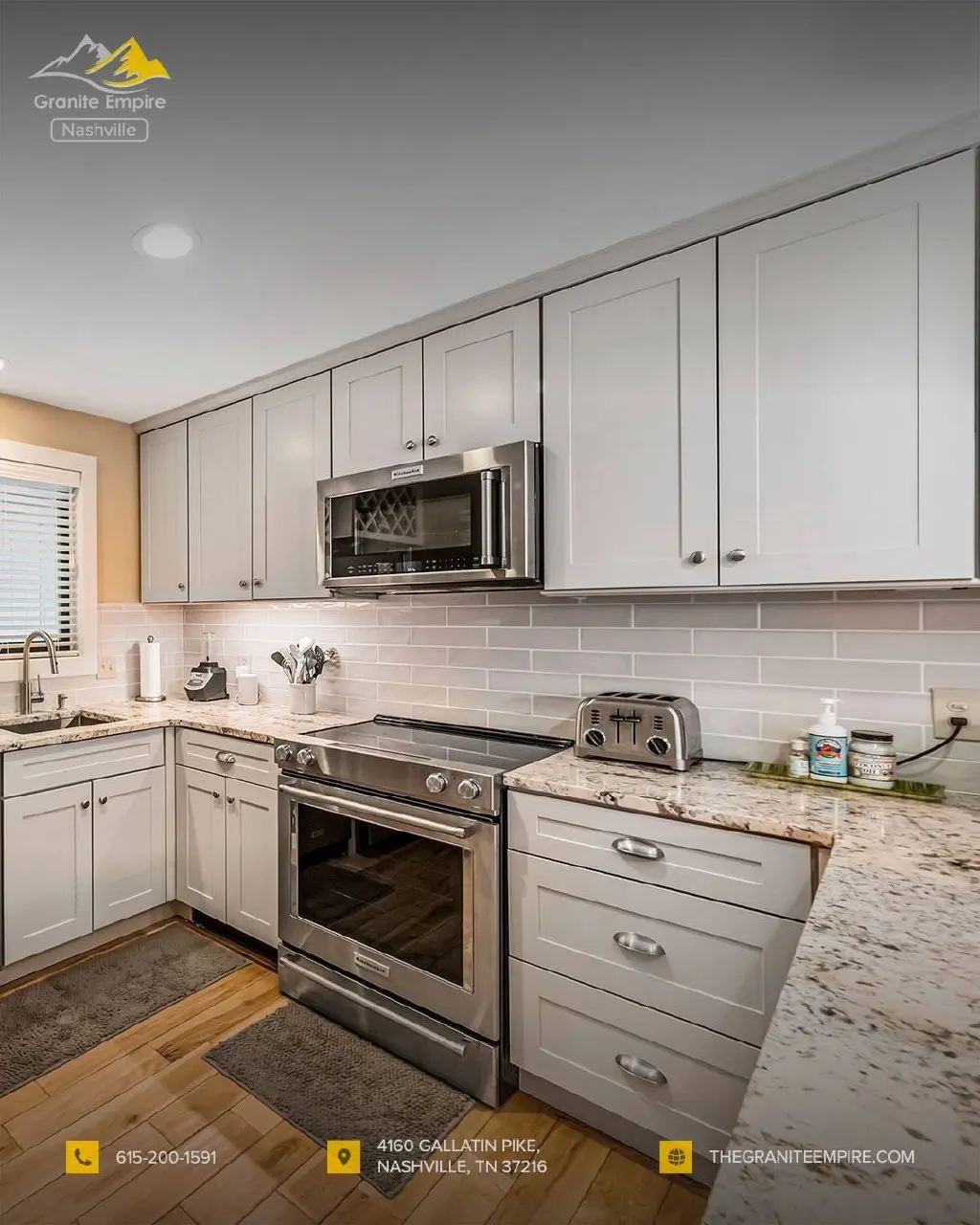
Rounded and eased countertop edges are generally less likely to chip than sharp, square corners because there is less of a concentrated point for an impact to hit. Bullnose, eased, and small-radius profiles are practical choices for busy kitchens, while very sharp edges and dramatic mitered details require more care.
The edge profile matters across granite, quartz, marble, and quartzite, although the material itself also affects how an edge behaves. Even extremely durable stone can chip if a heavy object strikes a vulnerable corner.
At Granite Empire of Nashville, we help homeowners working with countertop installers in Pleasant View, TN choose an edge profile based on the material, kitchen layout, daily use, and desired appearance.
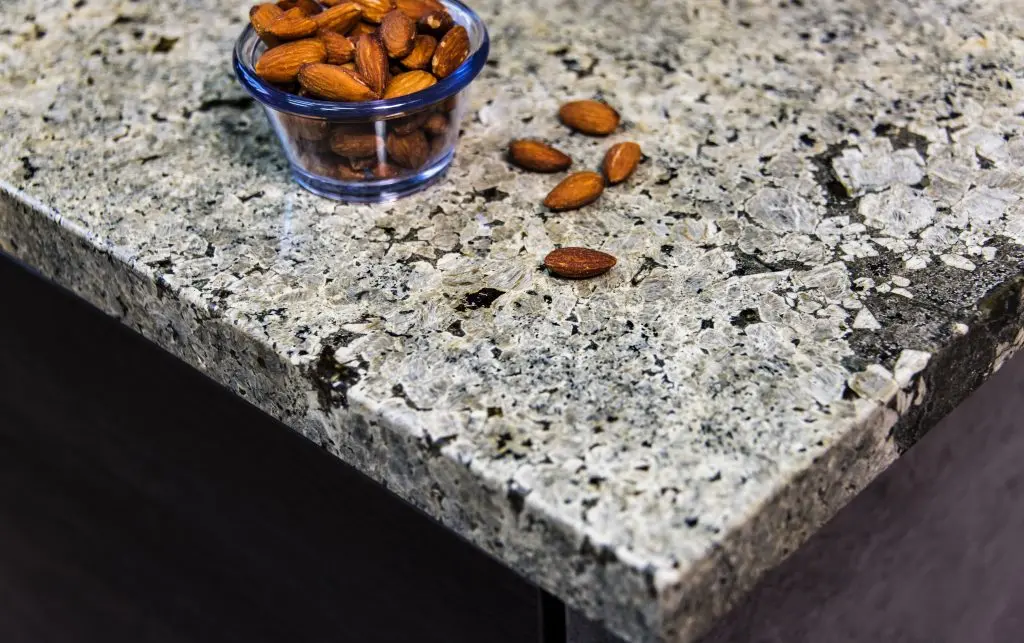
Which countertop edge profiles are least likely to chip?
The safest choices are generally eased, small-radius, and bullnose profiles.
These profiles reduce the sharpness of the countertop’s exposed edge and distribute impact over a larger area.
Eased edge
An eased edge is one of the most practical choices for modern kitchens.
It has a slightly softened corner rather than a completely sharp 90-degree edge.
Advantages include:
- clean appearance;
- simple fabrication;
- less vulnerable corner;
- works with almost any countertop material.
An eased edge is especially useful on kitchen islands where people regularly walk around the countertop.
Bullnose edge
A bullnose edge has a rounded profile.
Because there is no sharp exposed corner, it can be a good choice when reducing impact risk is a priority.
Bullnose also creates a softer, more traditional appearance.
Small-radius edge
A small-radius edge slightly rounds the corner while keeping a relatively contemporary appearance.
It provides a middle ground between a completely square edge and a strongly rounded bullnose.
For homeowners comparing countertop installers in Pleasant View, TN, this can be a good option when you want a modern profile without an especially sharp corner.
Is a square countertop edge more likely to chip?
A perfectly sharp square edge is generally more vulnerable to impact than a softened edge.
The corner concentrates force into a small area. A heavy pan, appliance, or other hard object hitting that point can cause a chip.
This does not mean square edges are a bad choice.
They remain popular because they create a crisp, contemporary appearance.
The important distinction is between a visually square edge and a literally razor-sharp edge. Many countertop fabricators slightly soften the exposed corner even when the overall design looks square.
That small detail can reduce vulnerability without changing the overall style significantly.
Are mitered edges more likely to chip?
Mitered edges require more detailed fabrication because separate pieces of material are joined to create the appearance of a much thicker countertop.
A mitered edge can look impressive, especially on a kitchen island, but the corners still need to be handled carefully.
The additional fabrication does not automatically make a mitered edge fragile. However, the sharp corners created by certain designs can be more vulnerable to impact than rounded profiles.
A mitered edge is best chosen for its design effect rather than because it offers superior impact resistance.
Does the countertop material affect chipping?
Yes. Edge durability depends on both the profile and the material.
Granite
Granite is a hard natural stone and generally performs very well in kitchens.
However, granite edges can still chip if struck with a heavy object, particularly around corners and cutouts.
At Granite Empire of Nashville, granite starts at approximately $48 per square foot.
Quartz
Quartz is also durable and popular for kitchens, but the exposed edges still require care.
Because engineered quartz contains resin, its behavior is different from natural stone, but a hard impact can still damage the edge.
Quartz starts at approximately $58 per square foot.
Marble
Marble is softer than granite and quartz, so homeowners should be more careful around exposed edges.
A rounded profile can be especially practical when using marble in a high-use area.
Marble starts at approximately $68 per square foot.
Quartzite
Quartzite is a natural stone known for its hardness and durability. However, a very sharp edge can still be damaged by impact.
Quartzite pricing at Granite Empire of Nashville is available upon request, because the specific slab has a significant effect on the final price.
Which edge is best for a busy family kitchen?
For a kitchen that gets heavy daily use, an eased or rounded edge is usually a practical choice.
This is especially true for:
- large islands;
- kitchens with children;
- narrow walkways;
- high-traffic areas;
- countertops next to appliance zones.
A softer edge can also reduce the chance of someone hitting a sharp corner while moving around the kitchen.
If you want a contemporary appearance, a small eased edge can provide durability without making the countertop look traditional.
If you want a softer aesthetic, a bullnose profile is another strong option.
Does countertop thickness affect edge durability?
Thickness can influence the overall construction and appearance of the edge, but thicker does not automatically mean chip-proof.
A 3cm countertop creates a substantial edge without necessarily requiring a built-up edge.
A 2cm countertop can also be fabricated successfully, including with a built-up edge when a thicker visual profile is desired.
What matters is the complete fabrication:
- slab thickness;
- edge design;
- support;
- corners;
- cutouts;
- installation.
A professional fabricator should evaluate these elements together.
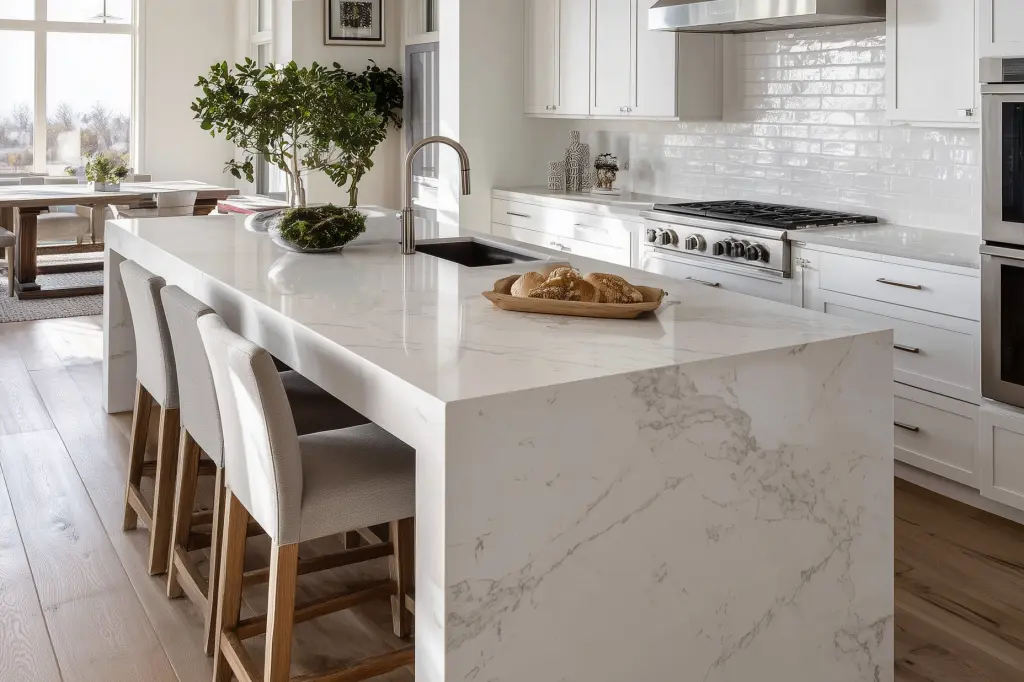
Which countertop edge is best for a kitchen island?
An island gives you more flexibility because the edge is highly visible from multiple sides.
For a modern kitchen, an eased or small-radius edge can provide a clean appearance while reducing sharp corners.
For a traditional kitchen, bullnose or another rounded profile can work beautifully.
A dramatic mitered edge can create a substantial furniture-like island, but the corners should be treated carefully because sharp points remain more vulnerable to impact.
If the island includes seating, the edge should also be comfortable for people sitting at it.
This is another reason to discuss the edge before fabrication rather than treating it as a purely decorative decision.
Can a chipped countertop edge be repaired?
In many cases, a small chip can be repaired, but the result depends on the material, size, location, and color.
Small chips along an exposed edge may sometimes be filled and blended by a professional.
However, prevention is preferable because a repair may remain slightly visible, particularly on highly patterned or dark countertops.
A damaged corner can also become more vulnerable to additional impact.
Choosing a less aggressive edge profile is therefore one simple way to reduce the likelihood of damage in the first place.
How do you protect countertop edges from chips?
The best protection is avoiding concentrated impact.
We recommend:
- not dropping heavy cookware onto the countertop;
- lifting appliances instead of dragging them;
- using cutting boards;
- keeping heavy objects away from exposed corners;
- avoiding impacts around sink and cooktop cutouts.
A rounded or eased edge provides additional protection, but no countertop profile is completely immune to damage.
The countertop should be treated as a durable working surface rather than an indestructible one.
How much do different countertop materials cost?
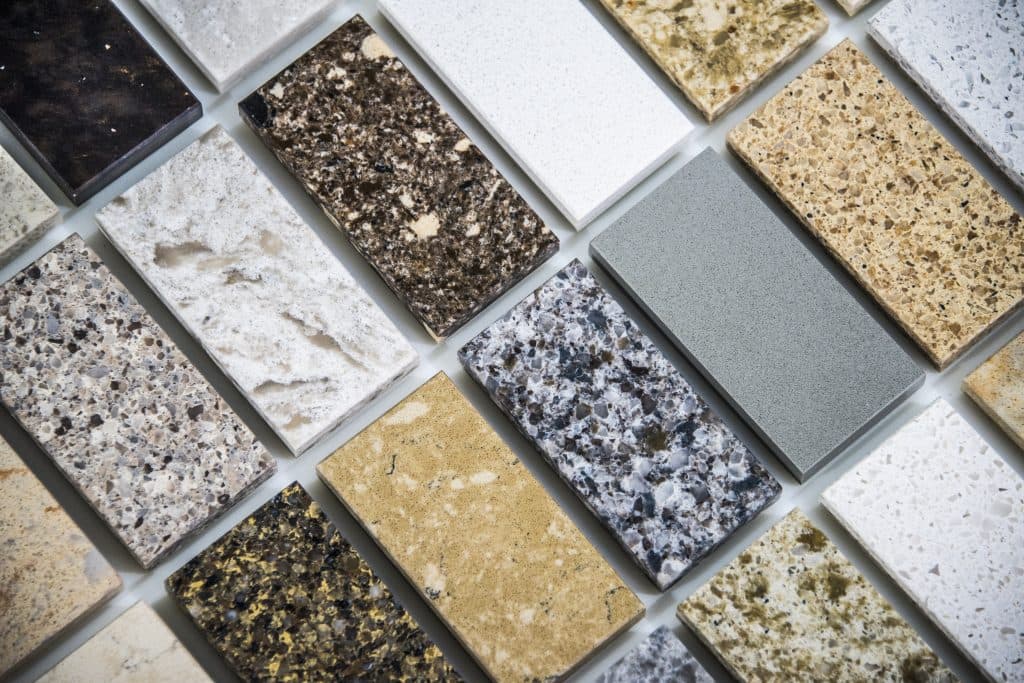
Current starting material prices at Granite Empire of Nashville are:
| Material | Starting price |
|---|---|
| Granite | From $48/sq. ft. |
| Quartz | From $58/sq. ft. |
| Marble | From $68/sq. ft. |
| Quartzite | Price available upon request |
The edge profile can affect the final price because fabrication requirements vary.
Other factors include:
- countertop dimensions;
- selected slab;
- edge profile;
- sink cutouts;
- cooktop cutouts;
- backsplash;
- seams;
- delivery;
- installation.
For example, a 40-square-foot granite countertop starts at approximately $1,920 in material before fabrication and installation.
The final quote is based on the complete project rather than the square-foot material price alone.
Frequently Asked Questions
Which countertop edge is least likely to chip?
Eased, small-radius, and bullnose edges are generally less vulnerable to impact than sharp square corners because they reduce concentrated force at the edge.
Is a bullnose edge stronger than a square edge?
A rounded bullnose edge is generally less vulnerable to direct corner impacts than a sharp square edge. The exact performance also depends on the countertop material and fabrication.
Can quartz countertops chip?
Yes. Quartz is durable, but a strong impact, particularly on an exposed corner, can cause a chip. A softened edge can reduce the risk.
Is granite less likely to chip than marble?
Granite is generally harder and more resistant to everyday impact than marble, but both materials can chip if a vulnerable edge is struck.
How much do countertops cost at Granite Empire of Nashville?
Granite starts at approximately $48 per square foot, quartz at $58, and marble at $68. Quartzite pricing is available upon request. Final pricing depends on the material, edge, fabrication, and installation.
Does Granite Empire of Nashville serve Pleasant View, TN?
Yes. Granite Empire of Nashville serves homeowners looking for countertop installers in Pleasant View, TN, providing granite, quartz, marble, and quartzite selection, professional templating, custom fabrication, edge profiles, cutouts, delivery, and installation.
Granite Empire of Nashville
4160 Gallatin Pike, Nashville, TN 37216
Phone: (615) 200-1591