
Marble can stain more easily than some other countertop materials, but a spill does not automatically become a permanent mark. The risk depends on the stone’s porosity, whether it has been sealed appropriately, what was spilled, and how quickly you clean it. Many marks homeowners call stains are actually etches, which are changes to the marble’s finish caused by acids.
At Granite Empire of Nashville, we explain both possibilities before customers choose a marble slab. If you’re considering marble kitchen countertops in Nashville, TN, understanding the difference makes everyday care much less confusing.
Does Marble Really Stain More Easily Than Other Kitchen Surfaces?
Yes, marble is more susceptible to absorbing some liquids than a nonporous engineered surface, but it is not destined to look stained after every meal. Marble is a natural calcite-based stone, and its absorption rate varies between individual slabs.
An oil spill that sits unnoticed may darken a porous area. A splash of wine wiped away promptly may leave no lasting discoloration. Proper care and a suitable penetrating sealer reduce the risk, although neither makes marble completely stain-proof.
Which Kitchen Foods Are Most Likely to Stain Marble?
Oil, coffee, wine, and strongly colored sauces deserve the most attention. Their oils or pigments may penetrate the surface if left long enough, particularly where protection has worn down.
For households choosing marble kitchen countertops in Nashville, TN, a useful distinction is what a spill can do:
| Common spill | Main concern | First response |
|---|---|---|
| Olive oil or cooking grease | Dark absorbed stain | Blot and clean promptly |
| Coffee, red wine, or berry juice | Pigment staining; possible etching | Blot, then use a marble-safe cleaner |
| Tomato sauce | Pigment, oil, and acid exposure | Remove promptly and rinse |
| Lemon juice or vinegar | Acid etching, often mistaken for staining | Wipe immediately; avoid acidic cleaners |
Leaving spills overnight increases the chance of a persistent mark. Quick cleanup matters more than trying to find an aggressive cleaner afterward.
How Can You Tell a Marble Stain From an Etch?
A stain changes the color within the stone, while etching changes the surface texture or shine. A dark oil patch often indicates absorption. A pale, dull ring left by lemon juice or vinegar is commonly an etch, especially on polished marble.
This matters because stain removal and refinishing are different jobs. A specialized poultice may help draw certain stains out of natural stone, while etching can require honing or polishing by a restoration professional. Adding more sealer will not repair an etched finish.
Does Sealing Stop Marble From Staining?
Sealing helps slow absorption, but it does not make marble waterproof or stain-proof. A suitable penetrating sealer gives you more time to wipe up liquids before they soak in.
At Granite Empire of Nashville, we recommend choosing a sealer and maintenance schedule based on the specific marble and the manufacturer’s guidance. Some slabs absorb liquids more readily than others. A sealer also does not prevent acid etching, so using vinegar or lemon-based cleaners remains a bad idea even on sealed marble.
Do Carrara and Calacatta Marble Show Stains Differently?
They can look different after a spill, but color alone does not establish which slab is more stain-resistant.
Bianco Carrara marble generally has a light gray-white background with softer gray veining. A dark oil stain can stand out against its quieter areas.
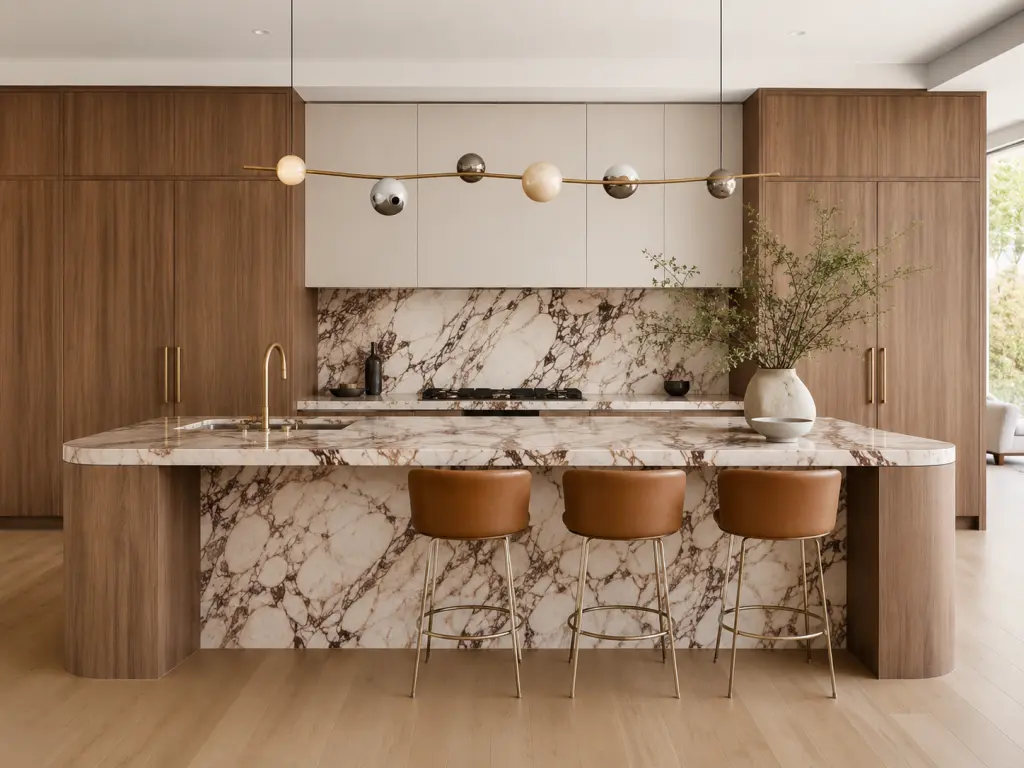
Calacatta Gold marble typically has a brighter background and bold gray or warm gold movement, which can make some marks more noticeable on broad white sections.
Both are natural marble, not engineered quartz. Their porosity should be evaluated individually. We recommend choosing the pattern you genuinely like and discussing its care requirements rather than assuming a more expensive variety is automatically less prone to stains.
Does a Honed Finish Hide Kitchen Marks Better Than Polished Marble?
Honed marble can make minor etching less conspicuous because it already has a matte surface. Polished marble has a reflective finish, so a dull acid mark often stands out more clearly.
However, a honed finish does not prevent liquid absorption, and dark oily marks may still be visible. Choose the finish for its appearance and the way you’re comfortable seeing everyday wear, rather than expecting it to solve every maintenance issue.
Can You Remove an Existing Marble Stain?
Sometimes. The best method depends on whether the mark comes from oil, an organic pigment, moisture, metal, or another source.
Start with a soft cloth and a pH-neutral cleaner approved for marble. If the discoloration remains, a stone-care professional can identify whether a suitable poultice or another treatment is appropriate.
Avoid bleach experiments, vinegar, scouring powder, or aggressive scrubbing. They can create additional etching or an uneven finish. Deep or old stains are not always completely removable, and restoration work should be evaluated separately from new countertop fabrication.
What Daily Habits Help Keep Marble Looking Good?
Protect the areas where spills happen most frequently rather than treating the entire kitchen as off-limits.
We recommend:
- Using cutting boards when preparing citrus or tomatoes.
- Placing wine glasses on coasters.
- Wiping up cooking oils promptly.
- Drying standing water around the sink.
- Avoiding acidic limescale removers.
- Cleaning with a microfiber cloth and a pH-neutral stone cleaner.
A marble countertop can develop a natural patina over time. Deciding whether that character appeals to you is part of choosing the material.
How Much Do Marble Countertops Cost in Nashville?
Standard marble countertops in Nashville generally cost about $100-$120 per square foot installed, so a 40-square-foot kitchen typically runs $4,000-$4,800 at that rate. Premium slabs and complicated layouts can cost more.
At Granite Empire of Nashville, marble starts at $68 per square foot for material. That puts 40 square feet at $2,720 before fabrication and installation.
The finished price depends on the chosen slab, edge profile, sink and cooktop cutouts, seams, and backsplash requirements. When budgeting for marble kitchen countertops in Nashville, TN, compare the full installed quote rather than a starting material figure.
How Long Does a Marble Countertop Project Take?
Most standard projects take approximately 2-3 weeks overall, depending on availability and scheduling. After final templating, fabrication generally requires 7-10 business days, followed by 1-2 days for installation.
We handle material selection, templating, custom fabrication, sink and cooktop cutouts, edge finishing, delivery, and installation. During selection, we also discuss how the chosen marble’s color and finish will work with cabinetry and everyday kitchen use.

Frequently Asked Questions
Will Olive Oil Permanently Stain Marble?
It can leave a dark mark if it absorbs into the stone, especially when a spill is left for a long time. Prompt blotting and appropriate sealing reduce the risk.
Can Red Wine Leave Both a Stain and an Etch?
Yes. Its pigment can discolor absorbent marble, while its acidity can affect a polished finish. These problems may need different treatments.
Does Sealing Prevent Lemon Juice From Etching Marble?
No. Sealer can slow liquid absorption, but it does not stop acid from reacting with calcite in the marble surface.
Can a Professional Make Stained Marble Look New Again?
Some stains can be reduced or removed through specialist treatment, and etched finishes may be refinished. Results depend on the damage; complete restoration cannot be guaranteed.
Does Granite Empire of Nashville Have a Showroom in Nashville, TN?
Yes. Our showroom is at 4160 Gallatin Pike, Nashville, TN 37216. Visit us to compare marble samples, explore finishes, and discuss the care needs of your preferred material with our team.
Marble does require attention, but choosing it does not mean giving up a working kitchen. If you’re considering marble kitchen countertops in Nashville, TN, visit our showroom with your cabinet samples and questions so we can help you choose a finish that suits your home.
Granite Empire of Nashville
4160 Gallatin Pike, Nashville, TN 37216
Phone: (615) 200-1591