
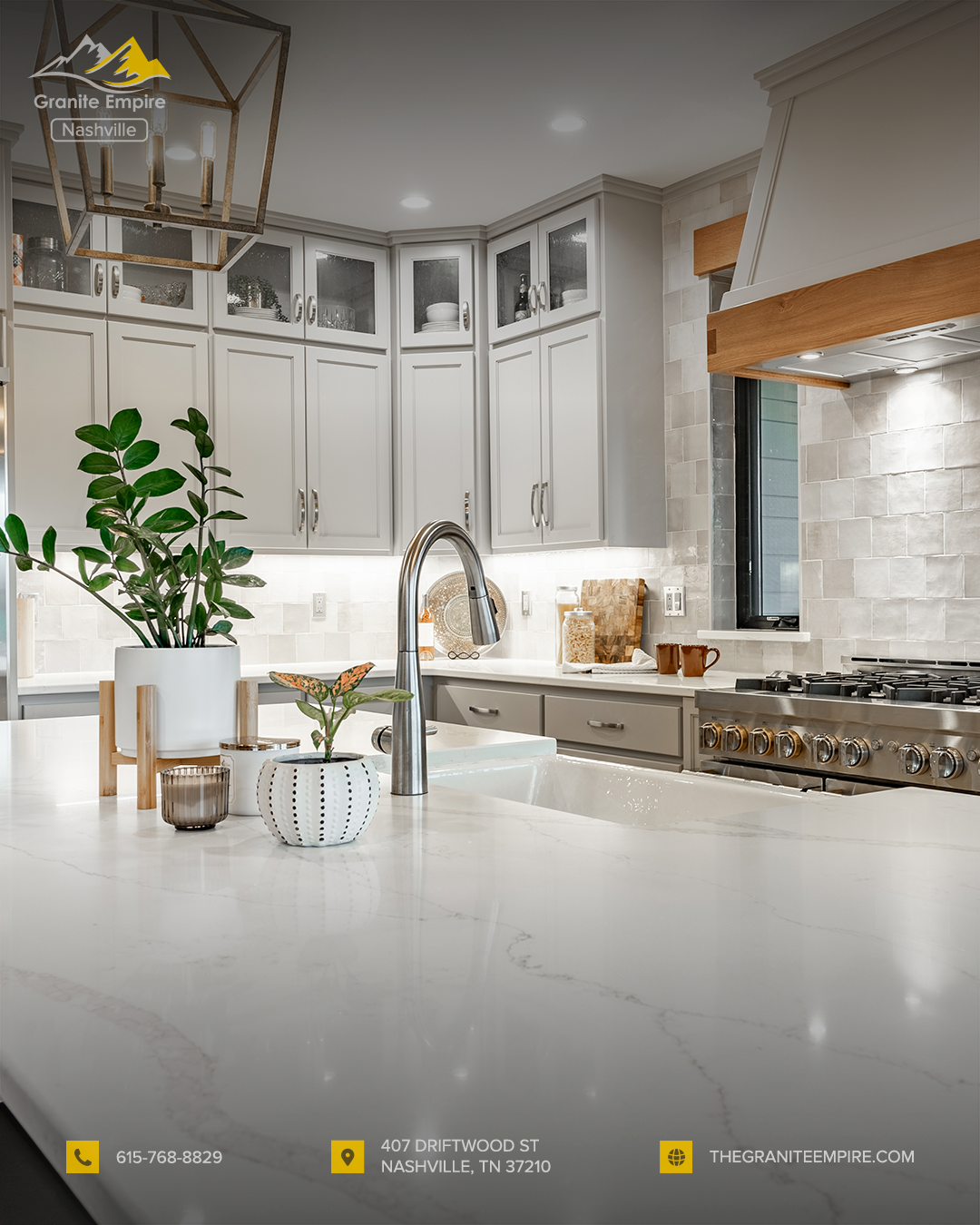
Large kitchen islands are no longer simple prep areas. They function as gathering spots, dining spaces, homework stations, entertaining hubs, and visual centerpieces. Because of their size and role, the stone you choose must perform structurally and aesthetically at the same time. A small countertop can hide minor design compromises. A large island cannot. Every seam, every vein, every edge becomes visible and influential.
When evaluating stone for oversized islands, durability under weight and stress becomes critical. The span between cabinet supports must be considered carefully. Thicker slabs or reinforced support structures may be required, particularly when incorporating extended overhangs for seating. Large islands often include sinks or cooktops, which remove material from the slab and can create stress points. A durable stone must withstand daily activity without compromising its integrity over time.
Granite Empire of Nashville frequently works with homeowners who underestimate the engineering behind a substantial island. Stone selection is not just about color. It’s about load distribution, support planning, and long-term resilience. The right material will resist cracking near cutouts and maintain structural stability even under frequent use.
For homeowners exploring countertops in Lewisburg, TN, understanding that a large island demands more from the stone than perimeter counters is essential. The island is often exposed to the most traffic, the most weight, and the most visual scrutiny. Selecting a stone that balances durability with refined design ensures the centerpiece of the kitchen remains strong and striking for years.
Is Granite Still the Best Option for Oversized Islands?
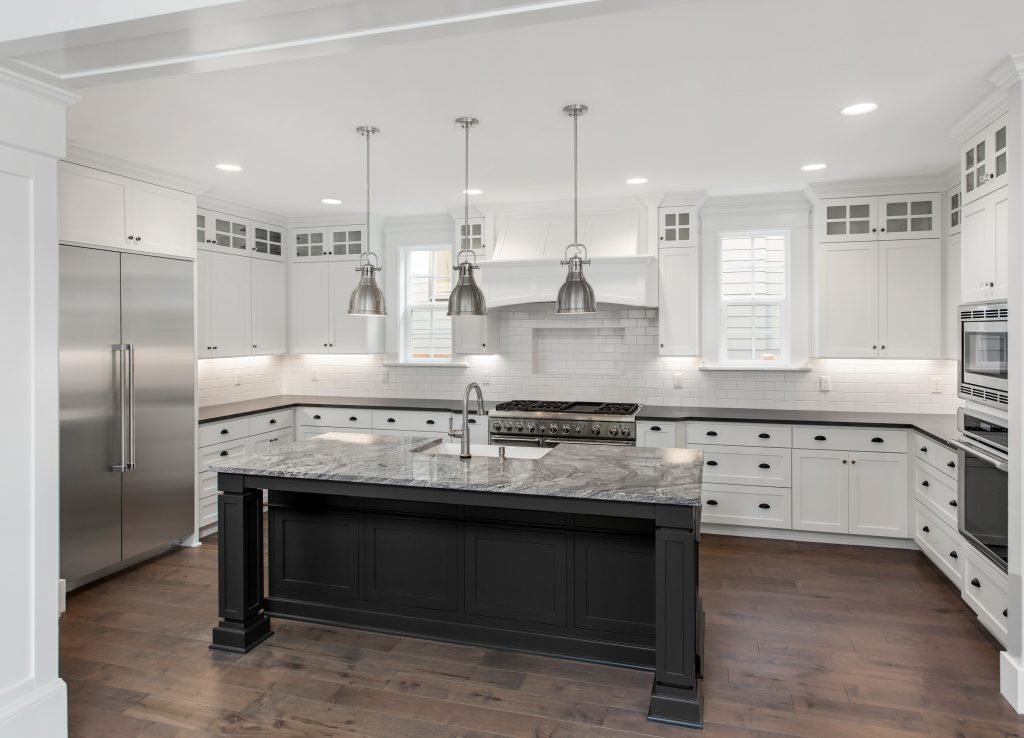
Granite remains one of the most reliable materials for large kitchen islands due to its natural strength and resistance to heat. Because it forms under intense geological pressure, granite handles weight and daily impact exceptionally well. For expansive islands with integrated sinks or cooktops, granite offers peace of mind regarding structural integrity.
Beyond strength, granite’s natural variation works beautifully across wide surfaces. Large islands benefit from movement and depth in the stone. Subtle mineral patterns prevent the surface from looking flat or monotonous. In open-concept homes, granite’s organic character helps anchor the space visually without overwhelming it.
Granite Empire of Nashville often explains that granite ages gracefully in high-traffic areas. Minor wear blends into its natural pattern rather than standing out. For families who cook frequently or host gatherings, that resilience is valuable. Over time, the surface maintains its appearance even under heavy use.
Homeowners researching countertops in Lewisburg, TN for expansive islands often choose granite when they prioritize durability without sacrificing sophistication. It provides confidence in both structure and style. Granite can also support extended seating areas when properly reinforced, making it ideal for islands designed for conversation and dining.
While other materials offer aesthetic advantages, granite’s combination of strength, longevity, and natural depth continues to make it a leading contender for oversized kitchen features.
How Does Quartz Compare for Large Island Installations?
Quartz offers a different advantage. Unlike natural stone, it is engineered to provide consistent patterns and colors across slabs. This consistency can be particularly appealing for large islands where pattern continuity matters. With quartz, homeowners can often achieve cleaner seam alignment and more uniform visual flow.
Quartz also resists staining effectively, which makes it practical for islands used as dining areas. Spills from coffee, wine, or sauces are easier to manage because the surface is non-porous. That feature appeals to busy households that want minimal maintenance.
Granite Empire of Nashville notes that quartz can be an excellent choice when homeowners desire bold veining or contemporary aesthetics. For modern kitchens with minimalist cabinetry, quartz creates dramatic focal points that feel intentional and polished.
When considering countertops, many homeowners weigh quartz for its low maintenance and predictable appearance. However, because quartz is engineered, it can be more sensitive to excessive heat than granite. Large islands that incorporate cooktops should account for this and ensure proper protection from direct heat exposure.
Quartz shines when homeowners prioritize visual consistency and easy upkeep. For those who entertain often and want a surface that remains bright and clean with minimal effort, quartz offers strong advantages.
What Role Does Thickness and Edge Profile Play in Large Islands?
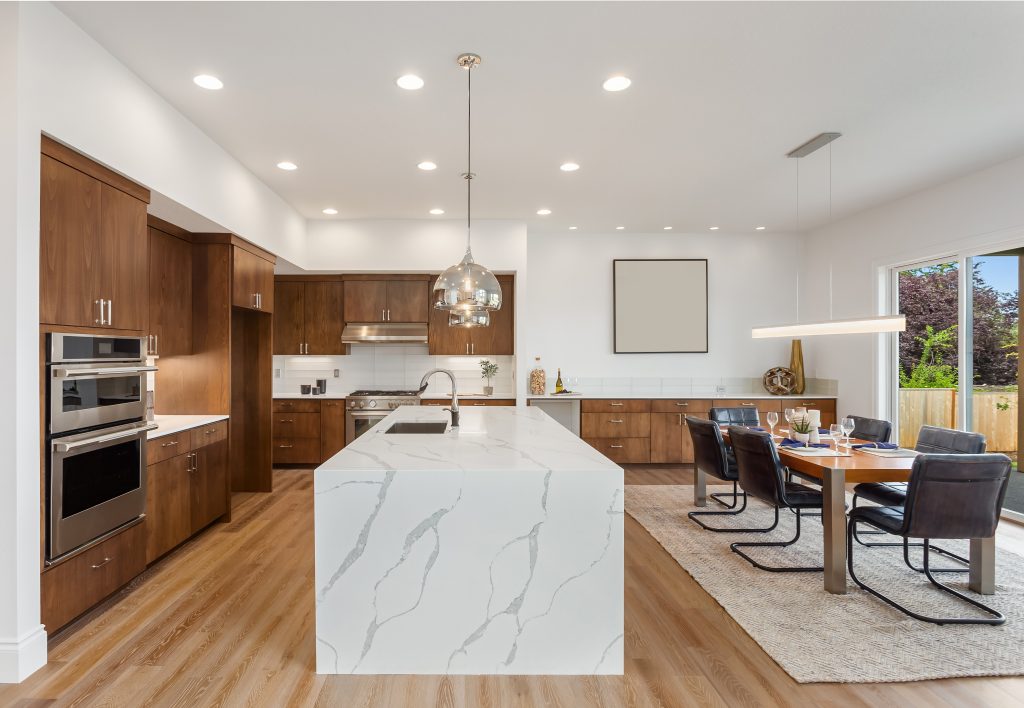
Thickness influences both appearance and structural strength. A standard 2cm slab may work beautifully along perimeter counters but can feel visually lightweight on a large island. Many homeowners choose 3cm slabs or mitered edges to create a bold presence that matches the island’s scale.
A thicker edge not only enhances visual impact but also provides added stability for extended overhangs. Seating areas require careful support planning, and slab thickness plays a role in distributing weight safely. Large islands are architectural elements, and their proportions must reflect that scale.
Granite Empire of Nashville often recommends considering how the edge profile complements the overall kitchen design. A simple eased edge offers clean lines for modern spaces, while a more detailed profile may suit traditional interiors. On large islands, the edge becomes highly visible, making this decision more important than on smaller surfaces.
For homeowners selecting countertops in Lewisburg, TN, understanding how thickness affects durability and style is crucial. A bold edge can transform the island into a statement piece, while a subtle profile may create understated elegance. The choice should align with the room’s overall tone.
Thickness is not merely decorative. It communicates strength and influences how the island integrates with cabinetry and flooring.
How Do You Balance Durability With Visual Impact?
Large islands demand both performance and presence. A durable surface that lacks visual interest can make the kitchen feel flat. A visually stunning slab that cannot withstand daily wear may lead to regret. Balancing these factors requires careful evaluation of lifestyle and design priorities.
Granite Empire of Nashville encourages homeowners to imagine real-world scenarios. Are children doing homework at the island? Are heavy cookware pieces placed on it regularly? Is it primarily used for entertaining guests? These questions shape material selection.
For those investigating countertops, understanding personal habits can clarify decisions. Granite may suit high-heat cooking environments. Quartz may support low-maintenance entertaining spaces. Marble, though softer, might appeal to those who prioritize elegance and are comfortable with natural patina over time.
The key lies in aligning material characteristics with everyday behavior. A large island is too central to be chosen based on appearance alone. When durability and style work together, the island becomes a functional showpiece rather than a fragile focal point.
What Should You Consider Before Finalizing Your Choice?
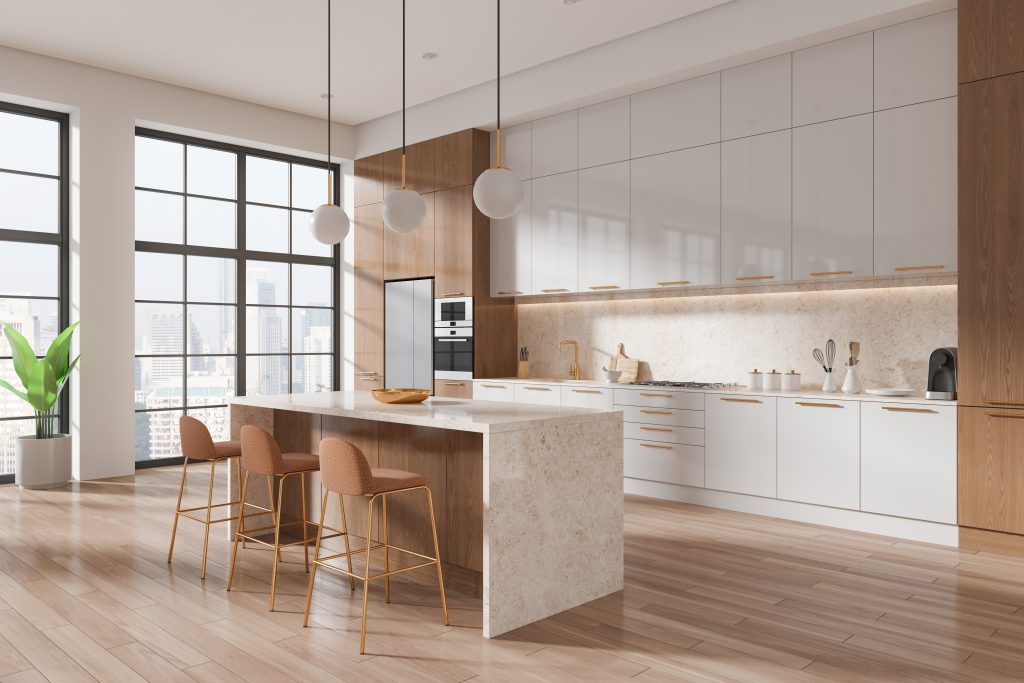
Before committing to a stone for a large island, homeowners should view full slabs rather than small samples. Scale changes perception dramatically. Veining that looks subtle on a sample may appear bold across ten feet of surface. Lighting conditions in the home should also be considered, as natural light can alter color perception.
Granite Empire of Nashville advises homeowners to discuss seam placement and support structure early in the planning process. Large islands often require careful engineering to prevent stress over time. Proper installation ensures the surface remains secure and aligned.
If you’re in search of countertops in Lewisburg, TN, working with experienced professionals makes a measurable difference. Installation quality directly impacts both durability and aesthetics. A poorly aligned seam or insufficient support can compromise even the strongest material.
A large kitchen island represents a significant investment. Choosing the right stone ensures that investment delivers long-term satisfaction. The best material will not only handle daily activity but also enhance the kitchen’s atmosphere.
Oversized islands have become the heart of modern homes. With thoughtful planning and the right stone selection, they can offer both enduring strength and timeless style.