
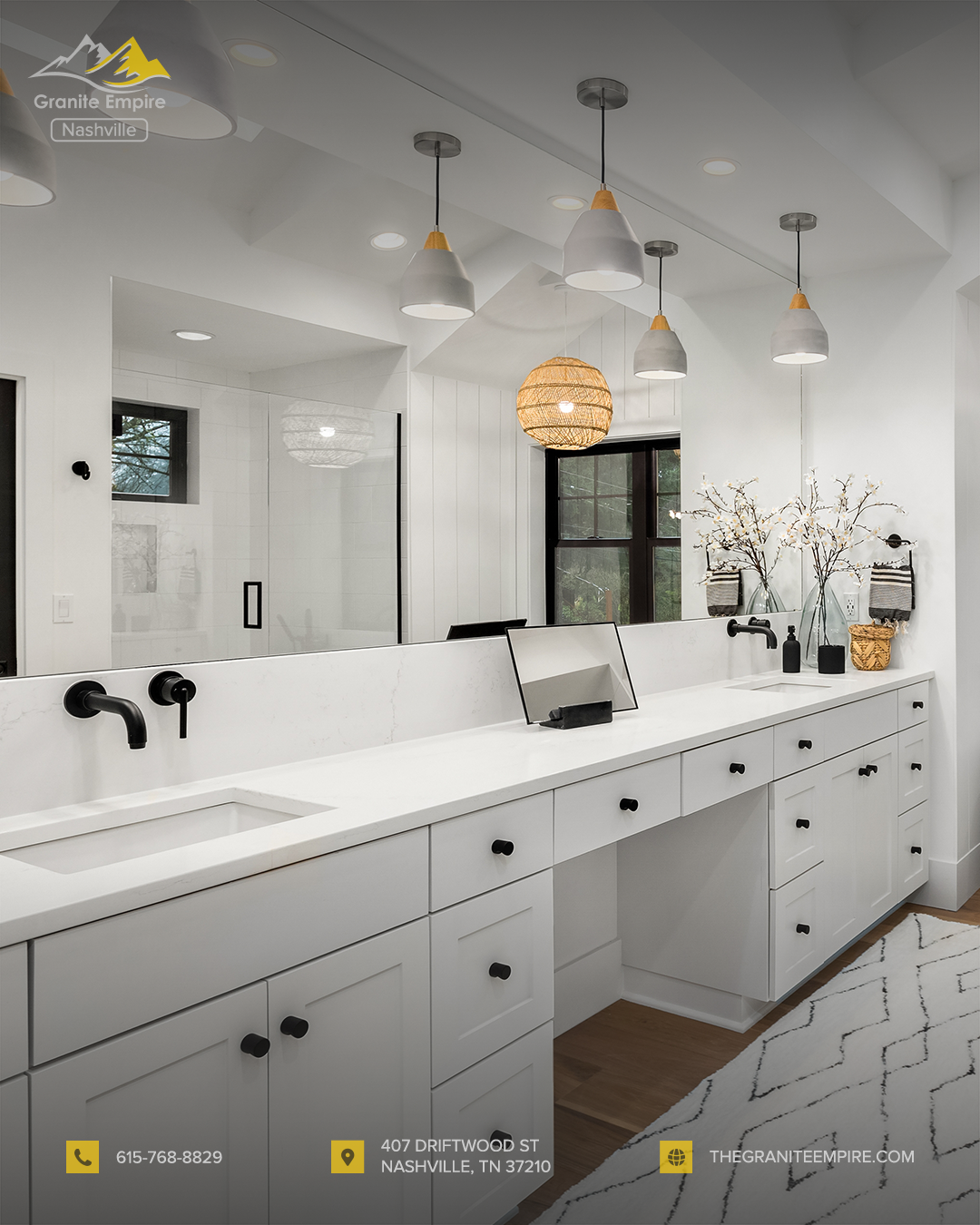
Designing the perfect bathroom vanity requires far more than choosing a beautiful stone surface. While the look of marble, quartz, or granite immediately elevates any bathroom, a vanity must also function comfortably and practically. The height, width, and depth all play a major role in determining whether your daily routines feel effortless or frustrating. A vanity that is too low can strain your back, while one that is too high can make simple tasks inconvenient. A surface that is too narrow limits storage, yet a vanity that is too deep may overwhelm the room’s layout. Because of these challenges, understanding the ideal dimensions for your bathroom—and how stone fabrication affects them—is essential.
Granite Empire of Nashville often guides homeowners through these decisions, helping them find that perfect balance between beauty and usability. For those comparing stone options and considering quartz, marble, or custom granite countertops in Shelbyville, TN, knowing the correct measurements is the foundation of a well-designed, long-lasting bathroom vanity. Below are the most important questions homeowners typically ask, along with detailed explanations to help you make the most informed decision possible.
What Is the Ideal Height for a Stone Bathroom Vanity?
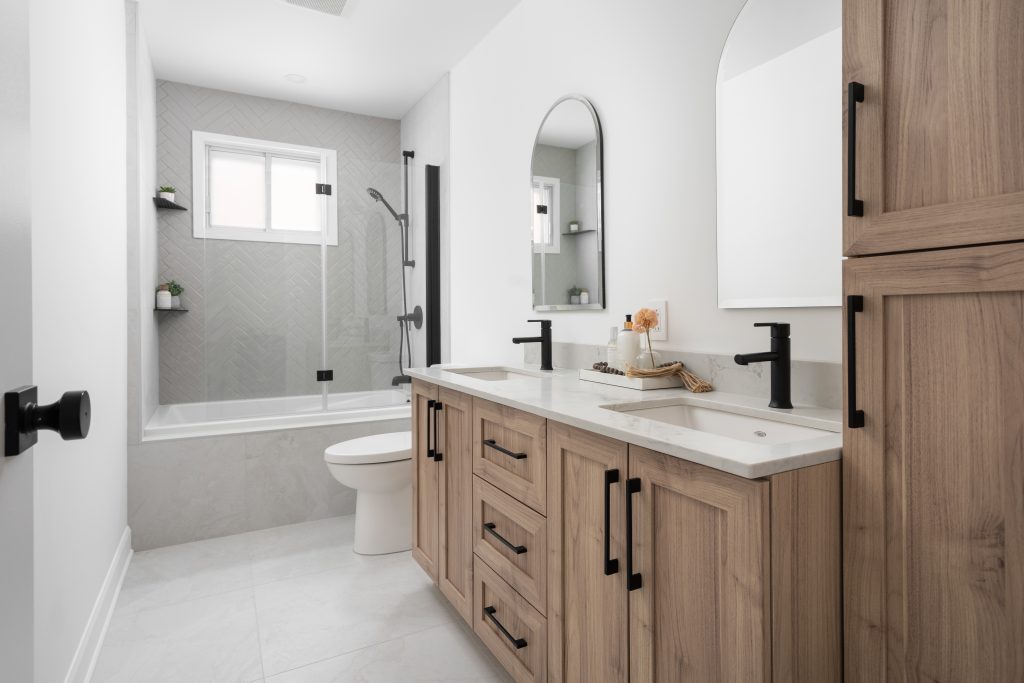
Vanity height is one of the most overlooked factors in bathroom design, yet it dramatically impacts daily comfort. Traditionally, bathroom vanities were built to a height of about 30–32 inches, ideal for children or general household use. However, modern preferences—and ergonomic research—have shifted toward taller vanities ranging from 34–36 inches. These updated heights align more naturally with adult posture and require less bending, reducing long-term strain on the back and shoulders.
But when stone is part of the design, things become even more nuanced. Stone countertop thickness plays a key role in the finished height of the vanity. For example, a standard stone thickness of 2 centimeters adds less height than a 3-centimeter slab, which is thicker and creates a more substantial visual profile. Homeowners who prefer dramatic stone edges or layered designs may unintentionally increase their vanity height beyond comfortable levels if they do not account for stone thickness during planning.
This is why choosing experienced fabricators—especially those familiar with bathrooms that incorporate materials like quartz, marble, or custom granite countertops in Shelbyville, TN—is so important. They ensure that the cabinet base and stone are engineered to reach your ideal final height. Beyond standard measurements, considerations such as vessel sinks, undermount sinks, and ADA accessibility guidelines can all influence the appropriate height. Vessel sinks, for instance, require a lower countertop so the combined height does not become impractical. Meanwhile, ADA-compliant vanities are designed to be accessible for seated users and cannot exceed 34 inches in height.
Ultimately, the ideal height comes down to who will be using the space. A vanity in a primary bathroom may lean toward the taller end of the spectrum for comfort, while a children’s bathroom may remain closer to traditional measurements. Stone fabrication professionals help ensure that whatever height you choose accommodates both the functional and aesthetic goals of the space.
How Wide Should a Stone Bathroom Vanity Be for Both Style and Function?
Width determines how much usable counter space you have and whether your bathroom feels luxurious or cramped. Standard vanity widths range from 24 to 72 inches, with single vanities typically falling between 24 and 48 inches and double vanities ranging from 60 to 72 inches or more. However, the introduction of stone into the equation changes how width is determined, especially when considering the weight of the stone and the structural support required to hold it safely.
For homeowners exploring bathroom remodels and comparing quartz, marble, or custom granite countertops in Shelbyville, TN, the width must also match the size of the bathroom and the scale of other fixtures. A poorly proportioned vanity—too small or too large—can disrupt the visual flow of the room. Larger vanities allow for expansive stone surfaces that showcase dramatic veining or a wide uninterrupted pattern, while more compact spaces benefit from consistent, subtle designs that prevent the room from feeling cluttered.
Another key factor is the type of sink chosen. A wide vanity accommodates dual sinks comfortably, but the placement of the sinks affects the stone’s integrity. When sinks are cut out of the slab, the remaining stone around the edges must be thick enough to maintain strength. This is particularly important for natural stone varieties that may have directional veining or softer mineral compositions. Highly skilled fabricators, like those at Granite Empire of Nashville, ensure that the cuts are strategically placed to preserve the durability and beauty of the slab.
Homeowners should also consider storage needs. Wider vanities allow for larger cabinets and drawers, meaning better organization of toiletries, towels, and grooming tools. Even in smaller bathrooms, maximizing horizontal space can create a more functional experience. A well-designed stone vanity feels balanced—not too narrow to be inconvenient and not too wide to disrupt movement within the room.
What Is the Best Depth for a Bathroom Vanity with a Stone Countertop?
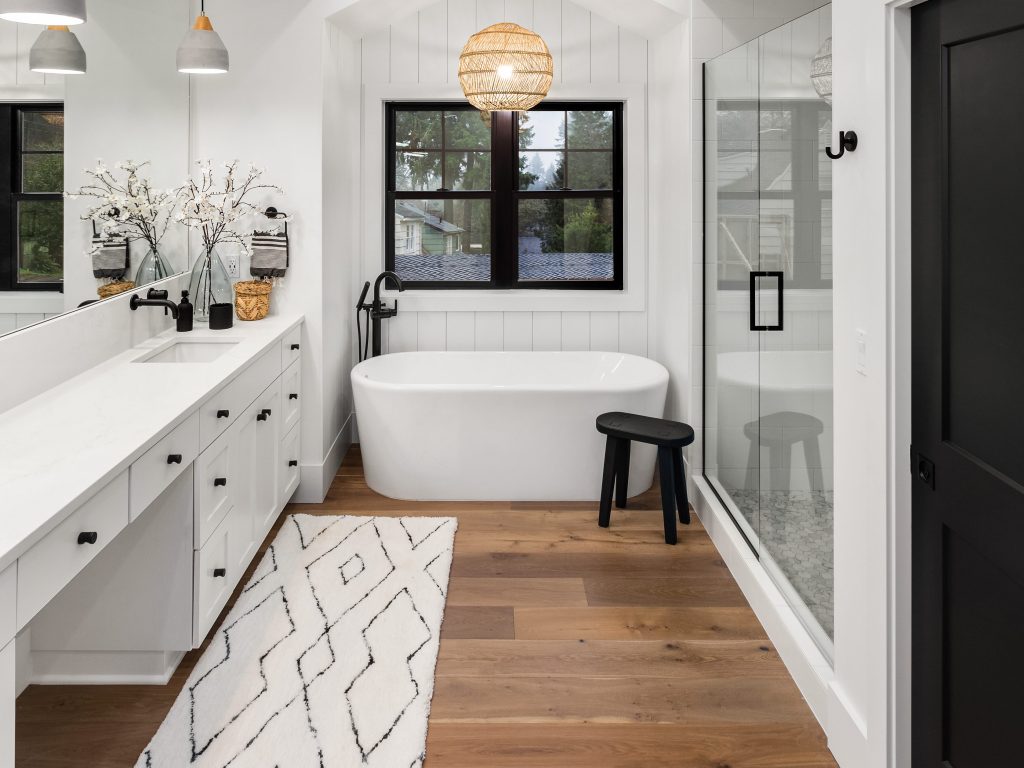
Depth is critical for usability and comfort. Most bathroom vanities are built with a depth of 21 inches, but variations exist depending on the room size and the homeowner’s needs. A vanity that is too shallow limits both surface area and storage, while one that is too deep can make maneuvering around the bathroom awkward.
When integrating stone, depth also determines how prominently the countertop appears. Stone countertops have a strong visual presence, and their depth affects the perception of luxury and stability. A deeper surface can make a bathroom feel more high-end, but again, only if the space allows for it. In compact bathrooms, deeper vanities may reduce walkway space and create unnecessary crowding.
Depth must also coordinate with the sink installation style. Undermount sinks require adequate space beneath the stone for plumbing, while vessel sinks require a shallower cabinet base to compensate for the additional height of the sink basin. Stone fabricators must assess these factors before cutting the slab to ensure the finished depth aligns with plumbing, cabinetry, and ergonomic preferences.
If homeowners are comparing quartz, marble, or custom granite countertops, they should remember that stone slabs cannot always be easily modified once cut. Depth must be finalized before fabrication begins. Professional installers evaluate the room dimensions carefully to avoid mistakes that could compromise both the practicality and the aesthetics of the vanity.
How Do Different Stone Materials Influence the Ideal Vanity Dimensions?
Not all stone materials behave the same, and understanding the differences helps determine the correct height, width, and depth for a vanity. Natural stones like granite and marble are incredibly durable but have distinct mineral compositions that affect how they are cut, polished, and supported. Some stones with prominent veining require additional structural reinforcement around the sink cutouts, while others, such as certain granites, offer more flexibility due to their dense crystalline structure.
Engineered stone like quartz also adds unique considerations. Quartz is extremely strong, consistent, and non-porous, making it a popular choice for bathrooms. Its uniformity allows for precise cuts and edging, which makes customizing dimensions easier. However, quartz can be heavier than some natural stones, so the cabinet base must be sturdy enough to support its weight.
Whether a homeowner selects quartz, marble, or natural stone options such as custom granite countertops in Shelbyville, TN, the material influences the final vanity dimensions in subtle but important ways. For example:
• Thick-vein marble slabs may benefit from wider vanities to showcase the natural patterns.
• Quartz slabs make excellent candidates for floating vanities due to their structural reliability.
• Granite often shines in deeper vanities where bold mineral movement becomes a design highlight.
Stone type also determines which edge profiles are suitable. Some intricate profiles, like ogee or cove edges, may not be recommended for certain stones due to fragility. Knowing these limitations ensures your vanity remains not only beautiful but also structurally sound.
How Can the Right Installer Ensure Your Vanity Dimensions Work Perfectly in Your Space?
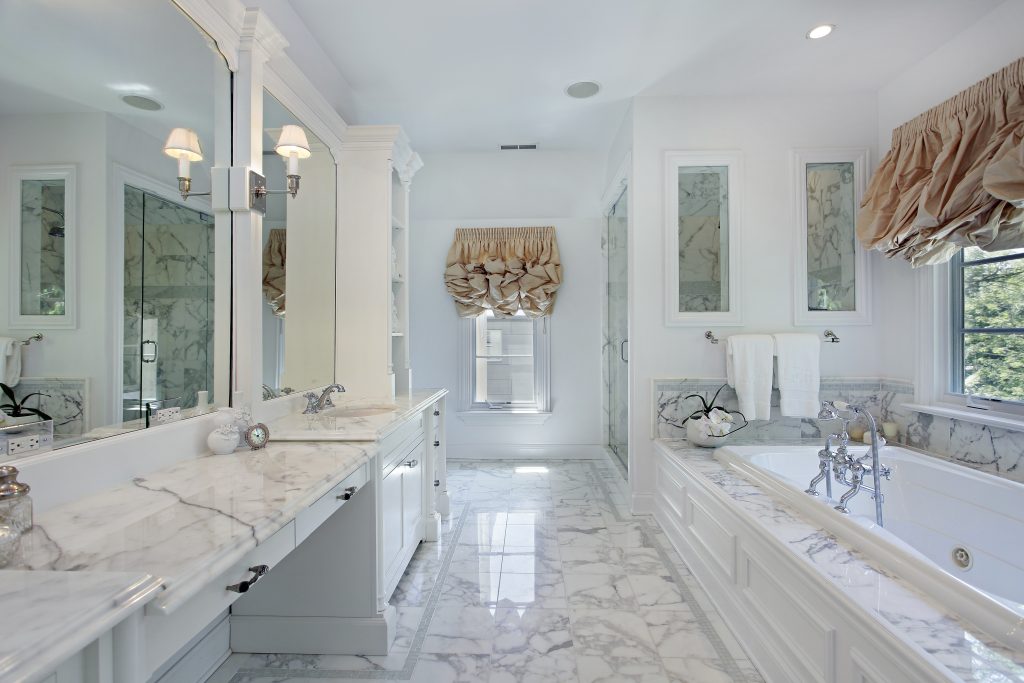
Even the most beautiful stone slab cannot reach its full potential without expert installation. Precision is crucial. Every cut, measurement, and support element must align perfectly to ensure the stone sits securely and functions long-term. This is why working with skilled professionals matters so much—especially when designing a vanity custom-tailored to your home.
Granite Empire of Nashville has extensive experience fabricating and installing stone vanities of all sizes, making sure each dimension—height, width, and depth—complements the room’s layout, plumbing requirements, and the homeowner’s lifestyle. Miscalculations as small as a quarter inch can result in alignment problems, plumbing challenges, or uneven surfaces. Experienced installers prevent these issues by double-checking all measurements before fabrication begins.