
Granite has earned a reputation for strength, longevity, and everyday reliability, yet many homeowners still approach it with one lingering concern: can it chip or crack? The question usually comes up right before a final decision is made, often fueled by online horror stories or one-off anecdotes that lack context. The truth is more nuanced—and far more reassuring—than most people expect.
Granite Empire of Nashville works with homeowners who want clarity, not marketing promises. Granite is a natural material, and like any natural surface, it has physical properties that deserve honest explanation. Understanding when granite is vulnerable, when it is exceptionally strong, and what truly causes damage helps homeowners make confident, long-term decisions rather than fearful ones.
Can Granite Countertops Crack Under Normal Daily Use?
This is usually the first and most important question. In short, granite does not crack under normal daily kitchen use. Everyday activities such as cooking, placing cookware, leaning on the counter, or hosting gatherings do not place enough stress on granite to cause structural failure.
Granite is formed under extreme heat and pressure deep within the earth. That geological history gives it a compressive strength far beyond what a residential kitchen can generate. Even heavy appliances like stand mixers or small countertop ovens do not threaten its integrity.
When cracks do occur, they are almost never the result of normal use. They are typically linked to installation issues, structural movement beneath the countertop, or pre-existing fissures that were not properly addressed during fabrication. Homeowners looking into granite countertops in Lewisburg, TN are often relieved to learn that everyday life is not the enemy of granite—poor support and improper handling are.
What Actually Causes Granite to Chip?
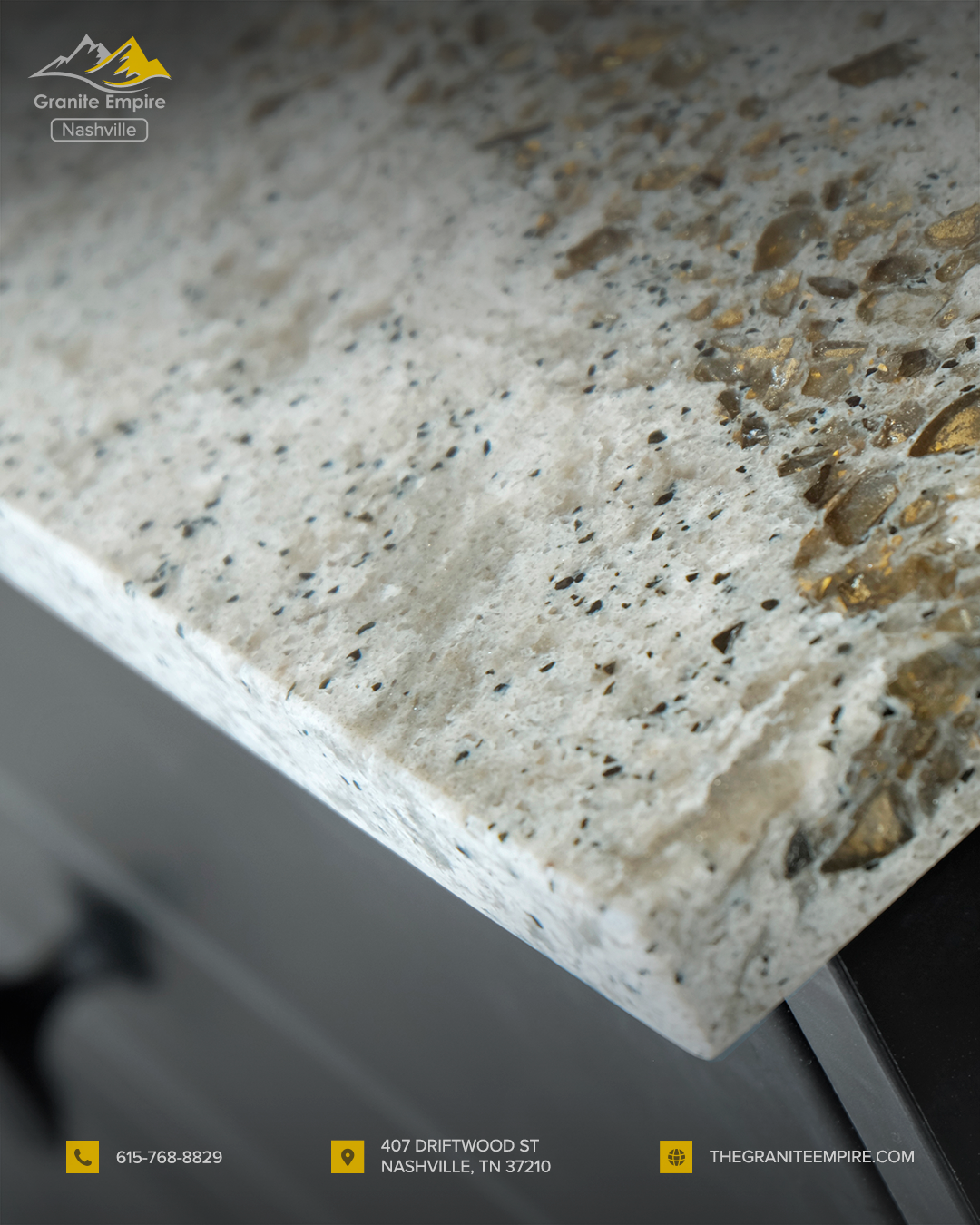
Chipping is possible, but context matters. Granite does not chip easily, and when it does, it usually happens at exposed edges rather than across flat surfaces. Dropping a heavy cast-iron pan directly onto a sharp corner can cause a small chip, especially if the edge profile is thin or squared.
That said, most chips are minor and often barely noticeable. Granite’s natural pattern helps camouflage small imperfections, which is one reason it ages so gracefully. In many cases, a professional repair can make a chip virtually invisible.
It’s also important to note that edge selection plays a role. Rounded or eased edges distribute impact more effectively than sharp edges. Experienced fabricators account for this during design, particularly for high-traffic kitchens. Homeowners choosing granite countertops in Lewisburg, TN benefit from understanding how design choices influence durability over time.
Are Cracks a Sign of Poor-Quality Granite?
This question comes up often, especially when homeowners see photos of cracked countertops online. In reality, cracks are rarely caused by low-quality granite. More often, they result from stress introduced after the stone leaves the quarry.
Granite slabs can develop stress fractures if they are transported improperly, cut without adequate support, or installed over uneven cabinetry. This is why fabrication and installation matter just as much as the stone itself.
Natural fissures in granite are not the same as cracks. Fissures are mineral separations formed during the stone’s creation and are typically reinforced during fabrication. They do not compromise strength. True cracks, on the other hand, usually indicate external stress.
This distinction is especially important for homeowners researching granite countertops, where professional fabrication and proper installation dramatically reduce the risk of structural issues.
Can Heat or Temperature Changes Cause Granite to Crack?
Granite is highly heat resistant. Hot pots, pans, and baking trays placed directly on the surface do not typically cause damage. The material was formed at temperatures far exceeding anything found in a kitchen.
Thermal shock—rapid, extreme temperature change—can theoretically affect stone, but it is exceedingly rare in residential settings. Pouring ice-cold water onto a granite surface that has been heated to an extreme temperature might pose a risk, but such scenarios are uncommon in real kitchens.
More importantly, heat does not cause granite to crack on its own. Issues attributed to heat are usually related to existing structural weaknesses or improper installation rather than temperature exposure itself.
Granite Empire of Nashville often reassures homeowners that normal cooking habits are not a threat to granite’s stability or appearance.

Does Cabinet Movement or House Settling Affect Granite?
Yes, and this is one of the most overlooked factors. Granite is strong, but it is not flexible. If the cabinetry beneath it shifts, settles unevenly, or lacks proper support, stress can transfer into the stone.
This is why proper substrate preparation is essential. Cabinets must be level, secure, and capable of supporting the weight of the stone evenly. When these conditions are met, granite remains stable for decades.
Cracks caused by cabinet movement are not a failure of the granite itself, but of the structure beneath it. Homeowners exploring granite countertops in Lewisburg, TN should prioritize experienced installers who understand how to account for structural variables before the stone is ever set in place.
Can Granite Be Repaired If It Chips or Cracks?
In most cases, yes. Minor chips can be filled and polished by professionals with excellent results. Even some cracks can be stabilized and repaired depending on their location and severity.
Granite’s repairability is one of its understated advantages. Unlike many engineered or laminated surfaces, granite can often be restored without full replacement. That repair potential adds to its long-term value and makes occasional accidents far less costly than homeowners fear.
It’s also worth noting that many homeowners live with small imperfections without ever noticing them. Granite’s natural variation makes it forgiving in real-world conditions.
Why Installation Quality Matters More Than People Think
Granite’s performance is closely tied to how it is installed. Proper seam placement, adequate support, and precise leveling all contribute to its long-term stability.
Installers must understand load distribution, overhang limitations, and cabinet alignment. When these factors are addressed correctly, granite remains remarkably resilient.
This is why homeowners looking for granite countertops in Lewisburg, TN should focus not just on slab selection, but on the expertise behind the installation. A well-installed countertop behaves very differently from one that was rushed or improperly supported.
Are Seams a Weak Point?
Seams are sometimes perceived as weak spots, but when done correctly, they are structurally sound. Professional seam placement avoids high-stress areas and reinforces the joint for long-term stability.
Problems arise when seams are placed over unsupported areas or aligned poorly with cabinet layouts. Again, this comes down to planning and experience rather than material limitations.
Well-executed seams blend visually and functionally, maintaining both strength and appearance over time.

How Granite Ages Compared to Other Materials
Granite improves with age in a way many materials do not. Minor wear blends into its pattern. Its surface develops character rather than visible degradation.
Chips and small imperfections do not accumulate the way they do on uniform surfaces. Instead, granite maintains its visual depth, which is why older granite kitchens often look better—not worse—than newly installed alternatives.
Granite Empire of Nashville often reminds homeowners that longevity is not just about avoiding damage, but about how a surface handles the passage of time.
Should Fear of Damage Stop You From Choosing Granite?
For most homeowners, the answer is no. Granite is one of the most forgiving and durable materials available for kitchens. When installed properly and used normally, it is unlikely to chip or crack in any meaningful way.
Understanding the real causes of damage replaces fear with confidence. Granite does not demand perfection. It supports real life, daily cooking, and years of use without constant worry.
Homeowners searching for granite countertops in Lewisburg, TN often find that once misconceptions are cleared, granite becomes an easy and reassuring choice rather than a stressful one.
Why Granite Remains a Long-Term Favorite
Granite’s combination of strength, repairability, heat resistance, and visual longevity keeps it relevant decade after decade. It does not require special treatment or constant vigilance. It simply needs proper installation and reasonable care.
This balance of durability and beauty is why granite continues to outperform trend-driven materials in real kitchens.
Granite Empire of Nashville helps homeowners make decisions rooted in facts rather than fear, ensuring that granite lives up to its reputation as a reliable, long-term surface.