

When planning a bathroom renovation, most homeowners focus on color and material first. They compare veining, texture, and finish. Thickness often feels like a technical detail that can be decided later. Yet the thickness of your vanity top can dramatically change how the entire bathroom feels. It affects proportions, visual weight, perceived luxury, and even how modern or traditional the space appears.
At Granite Empire of Nashville, we often see homeowners surprised by how much difference there is between 2cm, 3cm, and mitered edge profiles. What initially seems like a minor choice can completely shift the mood of a bathroom. For homeowners considering bathroom countertops in Lewisburg, TN, understanding these differences early in the design process prevents regret and ensures the final look aligns with long-term expectations.
Does 2cm Thickness Look Too Thin or Just Right for a Bathroom?
The 2cm profile is often associated with lighter, more delicate designs. In bathrooms where the cabinetry is slim, floating, or minimalist, a 2cm slab can feel intentional and refined. It works especially well in modern or European-inspired spaces where clean lines and subtle transitions are prioritized.
However, 2cm is not simply “thinner.” It visually reduces weight. In a small powder room, that can be beneficial. The countertop does not overpower the cabinetry. It allows the vanity to feel sleek and balanced. In bright bathrooms with light stone and soft finishes, 2cm enhances an airy aesthetic.
The question becomes whether the thinness feels elegant or underwhelming. In bathrooms with bold mirrors, heavy hardware, or large-scale tile, a 2cm edge may appear visually lost. The countertop might lack presence, especially if the cabinetry below has substantial framing.
For homeowners exploring bathroom countertops in Lewisburg, TN, the key consideration is proportion. A 2cm slab works best when the entire design language leans modern, minimal, and balanced. It rarely looks luxurious on its own; rather, it supports a carefully curated aesthetic. In the right context, it feels crisp and intentional. In the wrong context, it can feel visually incomplete.

Is 3cm the Safer and More Luxurious Choice?
The 3cm thickness is often considered the industry standard for natural stone in many regions. It offers visual strength and durability without appearing bulky. In bathrooms, 3cm creates a noticeable sense of substance. It frames the vanity and anchors the space.
One reason 3cm is so popular is that it strikes a middle ground. It feels premium but not dramatic. It complements both traditional and transitional cabinetry styles. It pairs well with undermount sinks and works beautifully with detailed edge profiles.
In many cases, homeowners who initially consider 2cm switch to 3cm once they see the physical difference in person. The added thickness enhances depth and shadow lines, especially under bathroom lighting. It gives the vanity a finished, intentional look.
Granite Empire of Nashville often recommends evaluating thickness alongside cabinetry style and overall room scale. In bathrooms with taller ceilings or larger vanities, 3cm prevents the countertop from appearing too delicate. It maintains proportional harmony.
If you’re in search of bathroom countertops, 3cm is often the most versatile choice. It adapts well to evolving design trends and holds visual strength over time. While trends shift, substantial stone rarely feels outdated. The added thickness communicates durability and permanence, qualities that elevate the overall feel of the bathroom.
What Is a Mitered Edge and Why Does It Look So Dramatic?
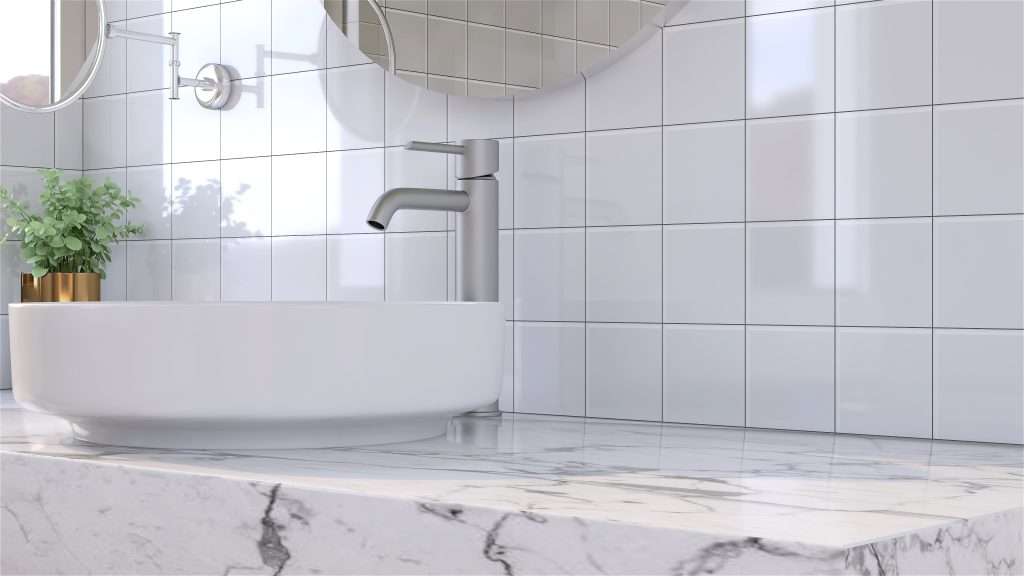
A mitered edge creates the illusion of a thicker slab by joining two pieces of stone at a 45-degree angle. From the outside, the edge appears significantly thicker—sometimes 4cm, 6cm, or even more—while the actual slab remains manageable in weight and cost.
The visual effect is striking. Mitered edges add drama and architectural presence. In bathrooms designed for impact, this detail can transform a simple vanity into a sculptural focal point. The increased thickness introduces bold horizontal lines that feel intentional and luxurious.
However, mitered edges are not subtle. They demand attention. In small bathrooms, the added thickness can overwhelm the space. The vanity may appear heavier than intended. In large master bathrooms with expansive mirrors and statement lighting, the bold edge can feel balanced and sophisticated.
For homeowners considering bathroom countertops in Lewisburg, TN, the mitered edge is often chosen when the goal is to create a spa-like or high-end aesthetic. It pairs especially well with waterfall sides or floating vanities. The effect is contemporary and confident.
Granite Empire of Nashville has seen mitered edges completely redefine bathroom spaces. The decision, however, should be intentional. It is not simply about thickness. It is about creating a focal point that aligns with the overall design story of the room.
Does Thickness Affect Durability or Just Appearance?
While thickness does influence structural strength, in bathroom settings the visual impact usually outweighs performance differences. All three options—2cm, 3cm, and mitered—are durable when installed correctly. Bathrooms typically experience less direct impact than kitchens, making structural concerns less pronounced.
The true difference lies in perception. Thicker profiles often feel more substantial, which psychologically communicates durability. Even if a 2cm slab performs well, it may not feel as strong as a 3cm slab simply because of visual weight.
Additionally, thickness influences edge detailing. More thickness allows for more pronounced edge profiles, which can soften corners and add character. A thicker slab can support intricate detailing without appearing fragile.
For homeowners evaluating bathroom countertops in Lewisburg, TN, the decision should focus on how the countertop integrates with cabinetry depth, sink style, and overall bathroom proportions. Structural performance is important, but aesthetic cohesion often determines long-term satisfaction.
Which Thickness Will Still Look Good Ten Years From Now?
Longevity is not only about material quality. It is about design decisions that withstand changing trends. Minimalist trends may favor thinner slabs today, while bold architectural styles may highlight thicker edges tomorrow.
The safest long-term choice often depends on context. In timeless, classic bathrooms, 3cm tends to age gracefully. It rarely feels extreme. It blends with both traditional and modern updates over time.
Mitered edges, while dramatic, can remain stylish if the overall bathroom design supports their boldness. If used thoughtfully, they feel intentional rather than trendy.
The 2cm profile may feel ultra-modern in certain designs. However, if the rest of the bathroom evolves toward heavier finishes or darker tones, the thin slab could appear less balanced in the future.
Granite Empire of Nashville encourages homeowners to think beyond immediate trends. Ask how the vanity will feel five or ten years from now. Consider whether the thickness complements permanent elements like tile and cabinetry rather than temporary decor.

How Do You Decide What Looks Best for Your Specific Bathroom?
The final decision is rarely about thickness alone. It is about scale, lighting, cabinetry, hardware, and even mirror size. A thick slab under a small mirror can look disproportionate. A thin slab under a large statement mirror may feel understated.
Start by considering the visual weight of your vanity base. If the cabinetry is bold and detailed, a thicker countertop often feels balanced. If the cabinetry is slim and floating, a 2cm slab can maintain elegance.
Think about lighting. Thicker slabs create deeper shadow lines, which can enhance texture and veining. In well-lit bathrooms, this depth can add dimension. In dimmer spaces, excessive thickness may feel heavy.
If you’re in search of bathroom countertops in Lewisburg, TN, seeing physical samples in different thicknesses can clarify the decision. The human eye responds strongly to proportion. What seems similar on paper feels dramatically different in person.
Granite Empire of Nashville has worked with countless homeowners who initially leaned toward one thickness and changed their mind after viewing full-size examples. The key is experiencing the material in context rather than imagining it abstractly.
Choosing between 2cm, 3cm, and mitered edges is not about right or wrong. It is about harmony. The thickness should complement the scale of the vanity, the architecture of the bathroom, and the atmosphere you want to create.
In smaller bathrooms, subtlety often wins. In expansive primary suites, bold thickness can elevate the entire design. For homeowners exploring bathroom countertops, the decision becomes clearer when viewed through the lens of proportion rather than trend.
A well-chosen thickness does more than support the sink. It frames the mirror, balances the cabinetry, and influences how the entire space feels every day. When selected thoughtfully, it enhances both design and long-term satisfaction.